
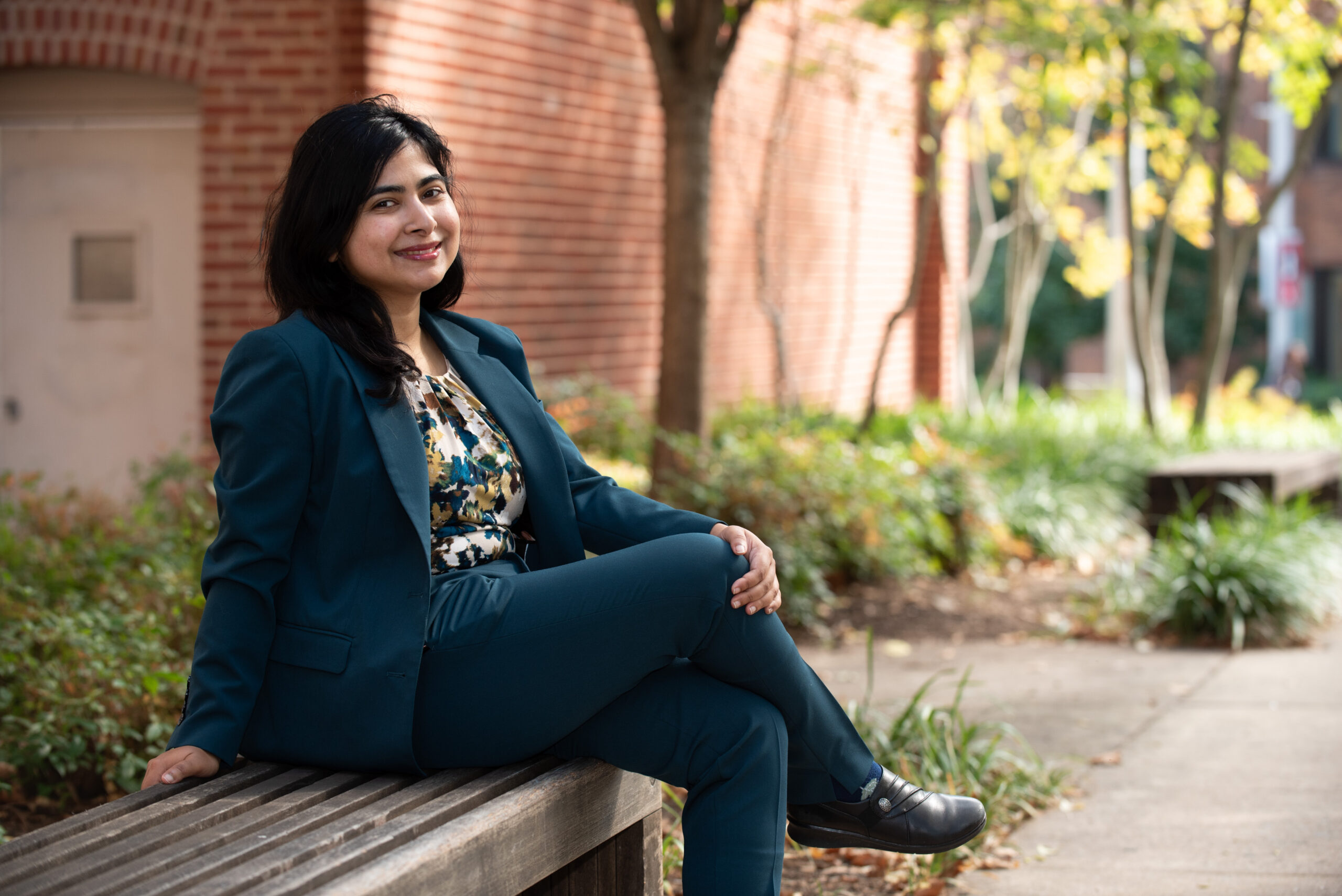
In The Legal Briefly episode “No Rainbow After Revolution,” Indira Rahman (JD ’25) speaks with Ohio State University Prof. Rasel Ahmed about LGBTQ+ rights in Bangladesh.
The Red Dot: Reflecting on Revolution
Late January 2025 found me peering into a Zoom screen, a red dot in the corner indicating that the recording was live. Across from me was Professor Rasel Ahmed, a longtime friend and pioneering activist in the Bangladeshi LGBTQ+ community. Rasel and I were both scholars of queer issues in Bangladesh, and spontaneous conversations on the work that defined us was not unusual. Rasel told the story of queer resilience through the lens of film as a professor of Theatre, Film, and Media Studies at the Ohio State University. Meanwhile, before law school, I had narrated the same story through data as a senior researcher for the Franklin & Marshall Global Barometers of Gay Rights (GBGR) and Transgender Rights (GBTR) project—the first global LGBTQ+ human rights database funded by the United States government.
What was unusual, however, was the context: I hadn’t called Rasel to simply catch up. I wanted to interview him for Intro to Legal Podcasting, a winter session course at Temple Law taught by Prof. Lowry Yankwich. The timing was apt. Bangladesh—a highly conservative country where it is illegal to be gay—had overthrown its fascist government just months prior, leaving a vacuum of unanswered questions. Was a new, more inclusive human rights paradigm possible for country with a historically failing record?
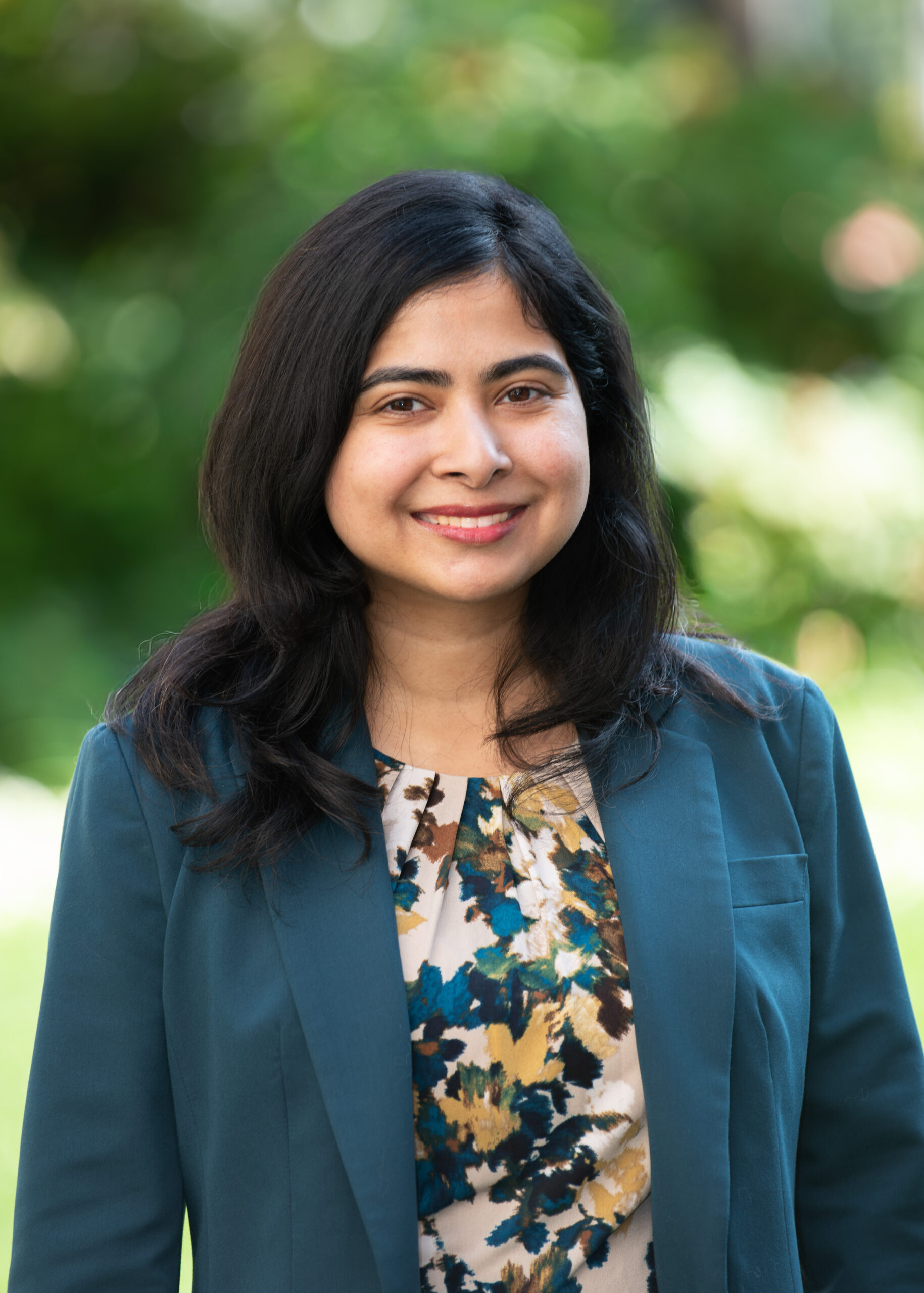 I was a novice interviewer questioning a seasoned interviewee, but Rasel was gracious and forthcoming. Our conversation evolved into a 50-minute clip exploring the possibility of LGBTQ+ liberation following the 2024 revolution.
A few days later, another face greeted my Zoom screen. Then a Vanderbilt Scholar at NYU Law, Arifur “Ari” Rahman had published subversive scholarship on gender-based violence against men in Bangladesh—an unthinkable concept in a highly conservative, patriarchal society. I first encountered Ari through an article he wrote for The Daily Star, Bangladesh’s largest English-language newspaper, making the case for constitutional protections for LGBTQ+ individuals. That article was eventually taken down from the newspaper’s website, after religious fundamentalists threatened to burn down the outlet’s offices for promoting homosexuality, a “Western” ideology they claimed was antithetical to Islam and traditional values.
By the second month of my final semester of law school, I had accumulated over 100 minutes of raw audio discussing the prospect of queer liberation in Bangladesh. I listened to these clips while on the Regional Rail down to Wilmington for my judicial externship at the Delaware Court of Chancery. Between bar prep sessions, I researched YouTube news clips covering the LGBTQ+ landscape in Bangladesh, unearthing everything from anonymized interviewees expressing their fear of coming out to the international coverage of the murders of Xulhaz Mannan and Mahbub Tonoy, prominent LGBTQ+ activists who had been hacked to death in broad daylight by Al Qaeda in the Indian Subcontinent (AQIS). In the quieter moments, I forayed into amateur scriptwriting, wondering: How does one condense centuries of struggle into a ten-minute episode?
The Anatomy of a Podcast: Translating Persecution
Long before I pivoted to law, I thought about pursuing a PhD in Queer Studies. But by my second year at the F&M Global Barometers, my interest had shifted to the legal mechanisms of queer persecution. One of my perpetual challenges within academia and policy research was bridging the gap between queer theoreticians and quantitative specialists. I rewrote portions of a Human Rights Quarterly article—initially sent back for revisions—explaining how our observed data on LGBTQ+ rights resistance among member states of the Organization of Islamic Cooperation (OIC) supported earlier work by queer theoreticians on international norm polarization. The article was published in October 2025 but not without significant intra-field translation.
This podcast posed a similar challenge: Translating state-sanctioned oppression for a U.S.-based audience unfamiliar with Bangladesh. Even now, it is difficult to convey the culture of impunity and shame surrounding treatment of LGBTQ+ issues in Bangladesh. The topic itself defied brevity. The murders of Xulhaz and Mahbub, the marginalization of the hijra (third gender) community, the colonial roots of Section 377—each topic deserved its own episode.
I ultimately narrowed the scope to the 2024 revolution, the queer community’s involvement in it, and the hope for a new, more accepting Bangladesh.
I sought out interviewees who could speak with authority about this evolving topic. Rasel, a well-established organizer in the LGBTQ+ community, posited that queer involvement in the 2024 movement was necessary because LGBTQ+ rights were inextricably intertwined with freedom from authoritarianism. Ari, the legal scholar, focused on reimagining the legal underpinnings of LGBTQ+ marginalization. A mix of news clips and my own narration filled in missing context, and I framed their insights into a story with a beginning, middle, and end.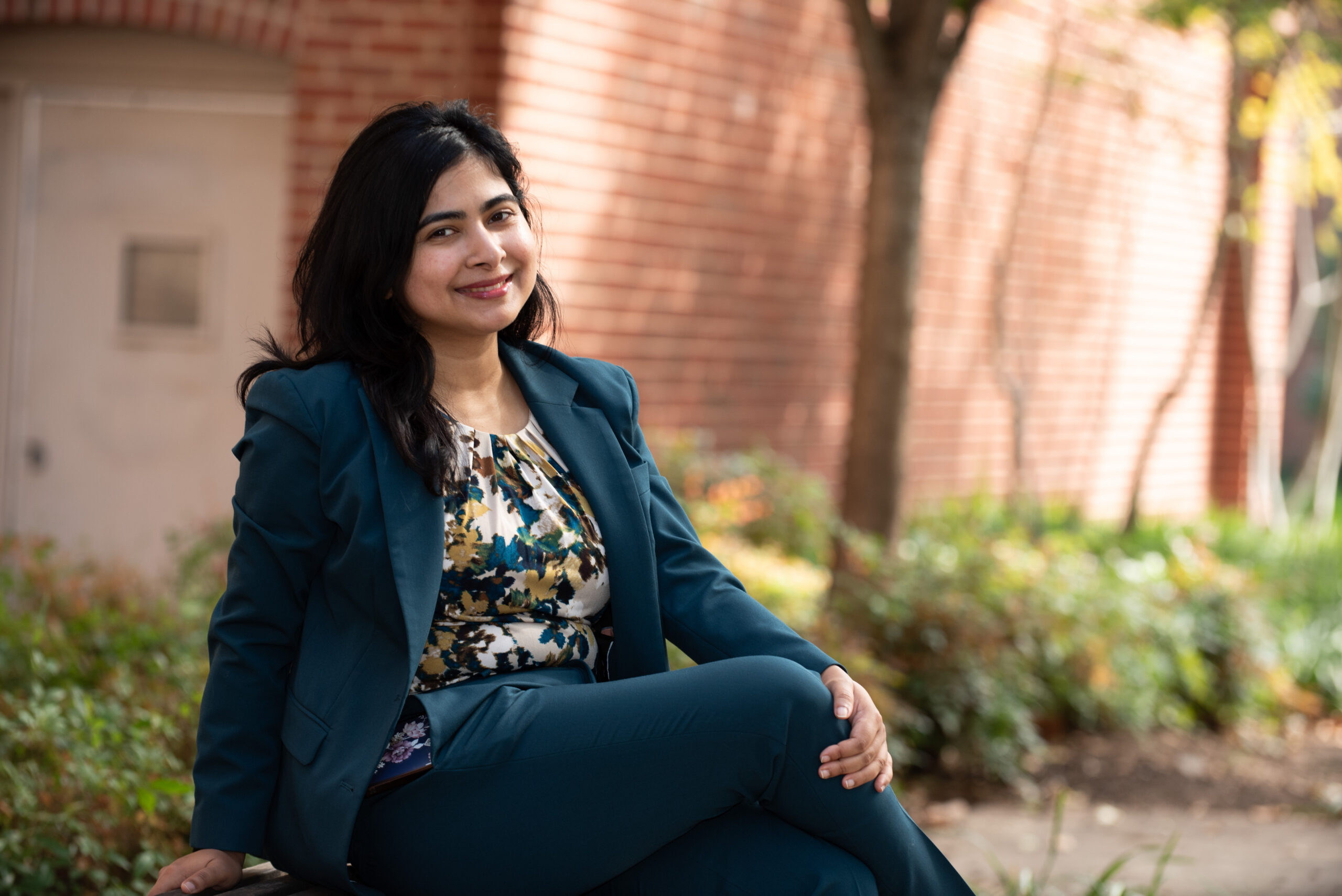
Looking back, the technical imperfections are obvious, the hiccups in sound levels and transitions emblematic of a first-time creator using free podcasting tools. I’m still astonished by the ninety minutes of audio that didn’t make it into the final cut. Perhaps a different creator would have made different choices. Perhaps the choices I made left at least some audience members unable to fully grasp the momentous opportunity revolution presented for the country’s queer community.
At any rate, the podcast is now out there—and I invite you to listen with an open mind.
No Rainbow at the End of Revolution
Technicalities aside, I can’t help but feel that what matters most is the existence of this podcast. In Bangladesh, where queer scholarship is surveilled, censored, and brutally silenced, it is next to impossible to document queer life and history. By its very presence on this platform, this piece stands in opposition to state-sponsored censorship.
In February 2026, Bangladesh finally held its first free and fair elections since the previous regime assumed power. Looking back at the podcast today—on the ten-year anniversary of the murders of Xulhaz Mannan and Mahbub Rabbi Tonoy—the reality is bittersweet:
Some things have stayed the same: Rasel is still teaching at the Ohio State University, inspiring the next generation of students and activists. Others have progressed for the better: Ari is now pursuing a doctorate in law at Oxford University, continuing his vital scholarship.
In other ways, we have moved backwards: The 2024 revolution vaulted the queer community into the political spotlight; many community members allied themselves with the pro-revolution movement, hoping that they could assume their place as equal members of society in a new Bangladesh. But while mainstream groups were happy to accept queer support to overthrow a common enemy, those alliances proved temporary.
Today, LGBTQ+ individuals in Bangladesh are canaries in the coalmine. Politicians increasingly demonize the queer community to appeal to a fundamentalist religious voter base. Even the hijra community, which previously enjoyed basic legal protections, has faced renewed persecution.
There is no rainbow at the end of this revolution. More than a year ago, I asked Rasel and Ari if it was time to challenge Section 377, the British colonial era law criminalizing same-sex conduct. They said no—rightly so. With Jamaat-e-Islami, the main right-wing opposition party, now holding 68 seats in Parliament—more than ever in its history—the future for LGBTQ+ rights in Bangladesh is more uncertain than ever, even as neighbors like India, Taiwan, and Thailand move towards liberalization.
A Call to Action
Despite the worsening situation, my conviction hasn’t changed: I became a lawyer to end the criminalization of LGBTQ+ people worldwide. That conviction has allowed me to meet a global network of scholars, activists, policymakers, and advocates who share the same passion.
To current and incoming students: Don’t be cynical. Law school is where you go to change the world. If you don’t know where to go, go where the need is. Talk to the people around you. People will surprise you. Take classes you would never consider taking. You might just surprise yourself. You don’t have to solve everything, but you must do something. Find your compass and stick to it.
To the Temple Law community—the community that took a queer scholar-activist from Bangladesh and allowed me to find my voice: The increasing marginalization of the most vulnerable populations in the world needs no repeating. Law school sits at the intersection of academia and advocacy. Offer more classes like Legal Podcasting that allow students to find their voice. Train lawyers who are bold, clear-eyed, and defiant.
I almost didn’t attend law school. For a long time, I had been a researcher, and I was good at it. But my legal training transformed that researcher into an advocate and has only reinforced my belief that none of us is free until we all are. It is time for us to act on that truth, even if it starts with a single red dot on a Zoom screen.
Indira Rahman (LAW ’25) is a queer, nonbinary scholar-activist from Bangladesh and an attorney based in Washington, D.C. Prior to law, Rahman was a senior researcher on the Frankin & Marshall Global Barometers of Gay Rights and Transgender Rights, the first U.S.-government funded databases on LGBT human rights in 204 countries and jurisdictions. Rahman’s practice involves complex corporate matters and pro bono advocacy in the areas of LGBT rights, immigration, and housing. Rahman’s next scholarly work on LGBT issues in Bangladesh is forthcoming in a book chapter, published by the Oxford University Press.
