
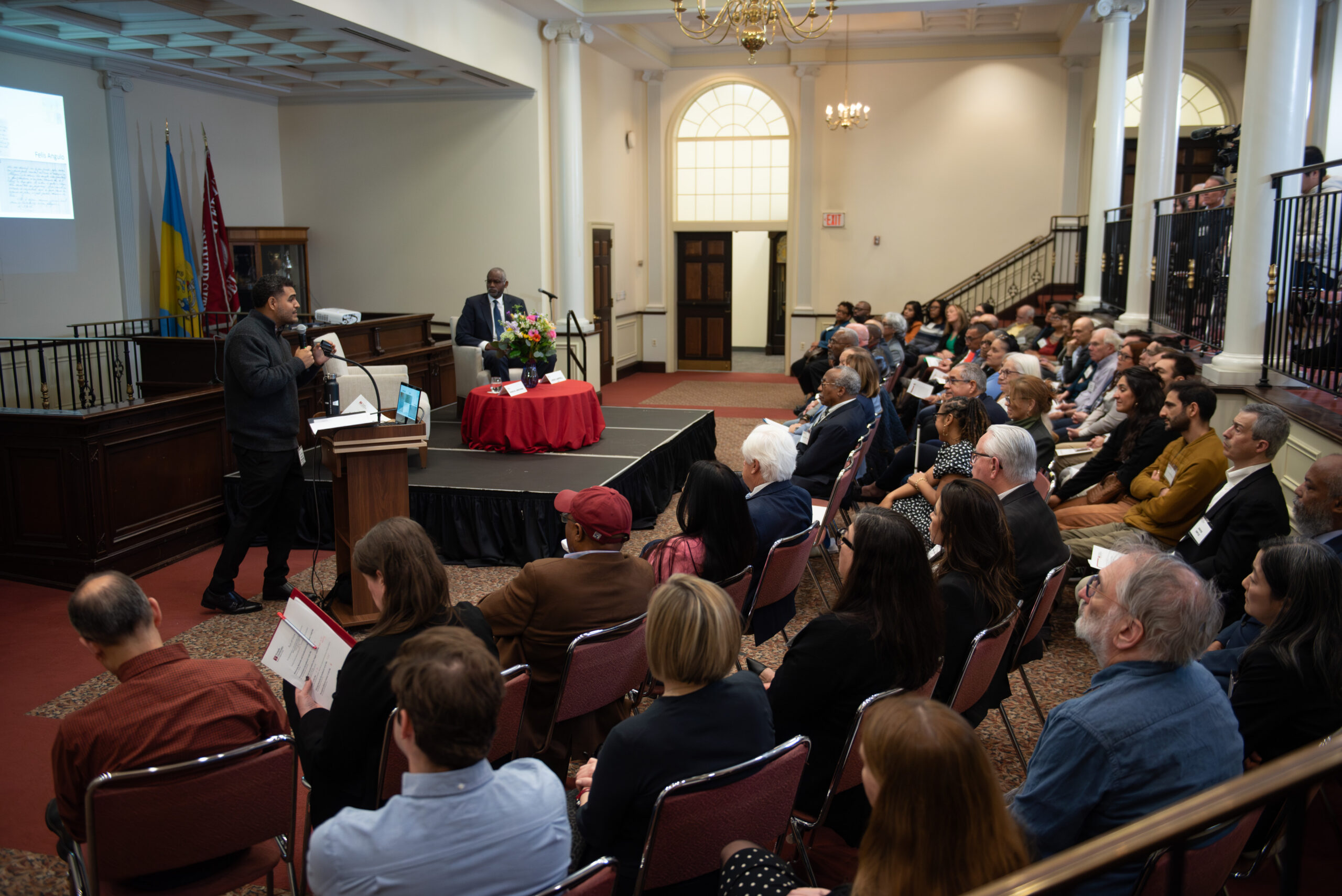
On March 27, 2026, Professor Daniel Morales-Armstrong of NYU presented a fascinating lecture on a little-known story about slavery in Puerto Rico which illustrates significant similarities and differences between slavery in the United States and Puerto Rico.
To a student of history, the parallels between slavery in the United States and Puerto Rico through the mid-nineteenth century are striking. Slavery was brought to Puerto Rico (a Spanish colony from 1492 through 1898) as early as 1518 in order to satisfy the labor needs of an expanding plantation economy primarily based on sugar cane. As was the case in the United States, slaves were subjected to brutal and dangerous living conditions. As a result, many rebelled against their masters or escaped from their plantations. Because of Puerto Rico’s geography, many escaped slaves were able to evade recapture and establish communities of their own throughout the island. These were similar to many of the “maroon” communities established by former slaves in the United States. The institution of slavery itself was a socially disabling and controversial institution. By the early nineteenth century, a strong abolitionist movement, similar to those in the United States and other countries, grew both in Spain and Puerto Rico and the pressure to abolish slavery became overwhelming.
At this point, the stories diverge. Slavery was formally abolished in the United States as a result of a long and bloody civil war, and its aftermath was violent and fraught with conflict. In Puerto Rico, on the other hand, slavery was abolished by legislative decree in 1873, and the traditional narrative was that the transition from slavery to freedom was smooth and amicable.
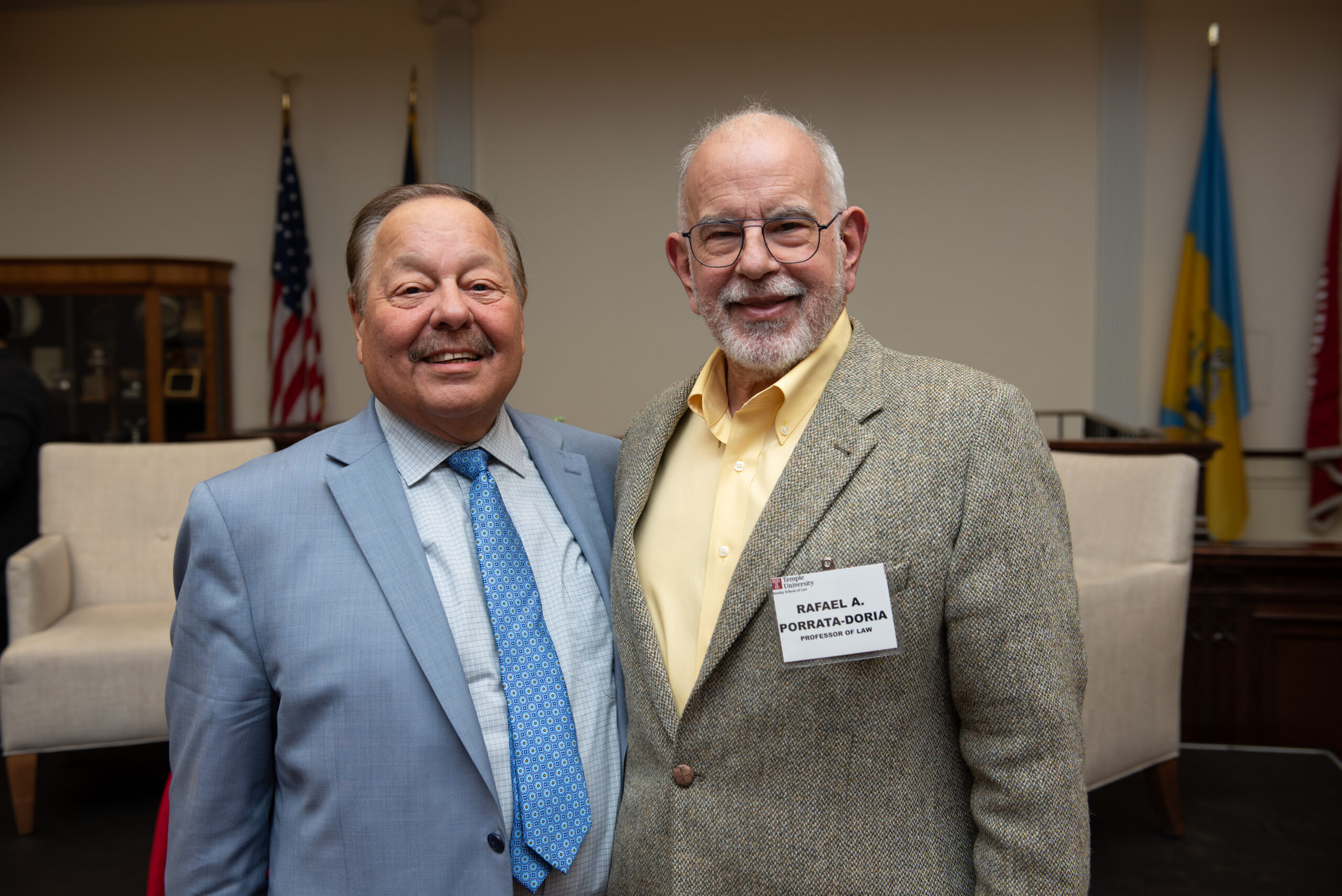
The Honorable Nelson Díaz and Professor Rafael Porrata-Doria.
The facts, Dr. Morales-Armstrong notes, show otherwise. The emancipation decree (which also provided for financial compensation for former slave owners and gave former slaves no political rights for five years) required that all former slaves enter into three-year employment contracts (based on a form annexed to the decree) with their former masters. The contract itself was very one-sided and heavily favored the employer. An observer analyzing this situation would have reason to believe that this was simply a three-year extension of slavery (through paid involuntary servitude) and the traditional narrative asserts that this state of affairs was not resisted.
Through his extensive research in Puerto Rican municipal archives of the era, Dr. Morales-Armstrong proves that former slaves actively resisted this system. These “resistance” techniques ranged from actual negotiations with their former masters to obtain better contract terms and litigation to seek damages from employers who breached their contracts to abandonment of their contracts by former slaves simply by leaving town. In other words, these individuals were able to use the law to protect their rights. Most crucially, Dr. Morales-Armstrong stresses, is that the aftermath of slavery in Puerto Rico was not smooth or amicable but continued a centuries-old tradition of enslaved peoples on the island resisting their captivity.
The story that Dr. Morales-Armstrong presented in his Díaz Lecture is totally unknown in the United States and little-known in Puerto Rico. It illustrates, he argues, how dominant groups within a society will distort history to obscure difficult stories. I found former slaves’ use of an unfavorable law to protect and enforce their rights fascinating.
