All posts filed under: Student Commentary

From Scholar-Activist to Advocate: Ruminating on LGBTQ+ Rights in Bangladesh Through Legal Podcast

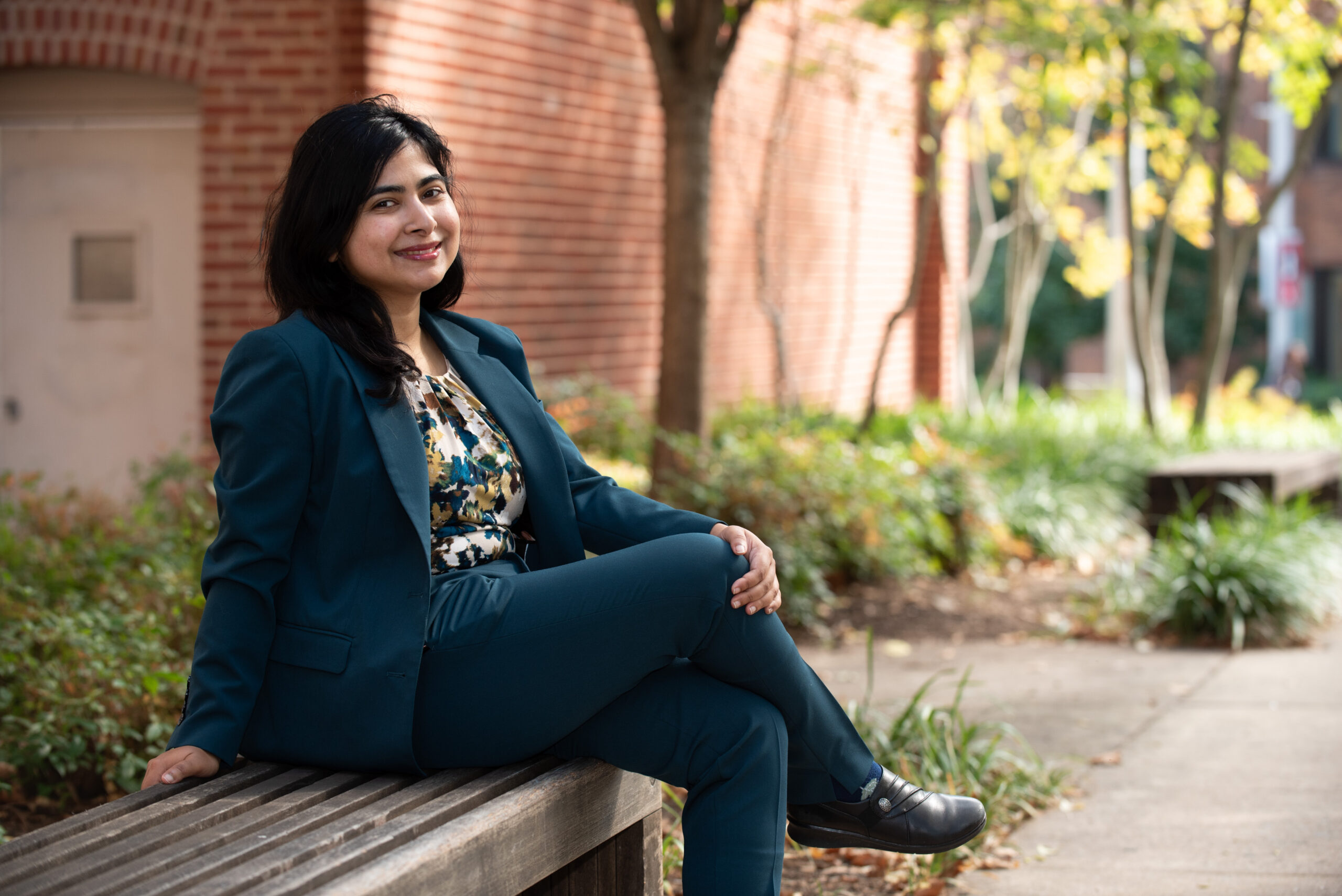
In The Legal Briefly episode “No Rainbow After Revolution,” Indira Rahman (JD ’25) speaks with Ohio State University Prof. Rasel Ahmed about LGBTQ+ rights in Bangladesh. The Red Dot: Reflecting on Revolution Late January 2025 found me peering into a Zoom screen, a red dot in the corner indicating that the recording was live. Across from me was Professor Rasel Ahmed, a longtime friend and pioneering activist in the Bangladeshi LGBTQ+ community. Rasel and I were both scholars of queer issues in Bangladesh, and spontaneous conversations on the work that defined us was not unusual. Rasel told the story of queer resilience through the lens of film as a professor of Theatre, Film, and Media Studies at the Ohio State University. Meanwhile, before law school, I had narrated the same story through data as a senior researcher for the Franklin & Marshall Global Barometers of Gay Rights (GBGR) and Transgender Rights (GBTR) project—the first global LGBTQ+ human rights database funded by the United States government. What was unusual, however, was the context: I hadn’t called Rasel …

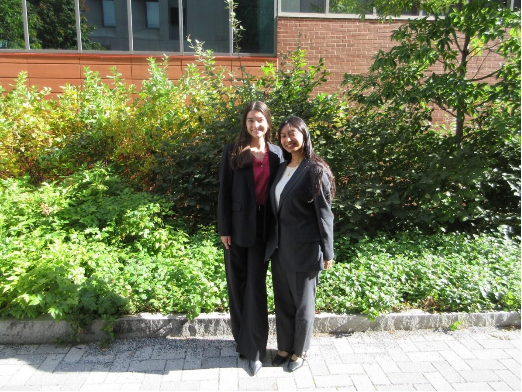
Temple Law students Victoria Faria and Sarah Ismael at the First Open Round.

Temple Law’s Alternative Dispute Resolution Team Reaches Quarterfinals at the ABA MAC Cup III Competition

Temple Law students Victoria Faria and Sarah Ismael, who are members of Temple Law’s Alternative Dispute Resolution Society (“ADRS”), went to the ABA Business Law Section’s third annual National Invitational M&A negotiating competition, known as the MAC Cup. By reaching the Quarterfinals and competing in four negotiations, Victoria and Sarah finished among the top eight teams (“Elite 8”) of the original 64 student teams from law schools across the United States and Canada. The MAC Cup requires students to create an issue list based on the competition’s fact pattern, mark-up an assetpurchase agreement (“APA”) reflecting the prevailing issues identified and then participate in a mock negotiation with other competitors. The competition allows law school students to learn about M&A deals and develop their negotiation skills by encouraging students to use the same tools M&A attorneys rely on, like: (1) the ABA’s M&A Private Target M&A Deal Points Studies; (2) Westlaw’s CoCounsel and Practical Law; and (3) Hotshot Legal’s digital learning video service.  This year, the competition centered on superstar couple Tara Quick and Ted Kickstart …

The Incompatible System: Why Ending Capitalism is Necessary to Avert Climate Catastrophe

The climate crisis is often framed as a technical or policy failure: we have the wrong incentives, insufficient innovation, or weak political will. A deeper examination reveals it to be a systemic failure. The mounting evidence suggests that the core operating system of the global economy—capitalism—is programmed with a fatal contradiction: it must consume the very biosphere upon which all life depends. To believe this system can now engineer its own salvation is a dangerous illusion.   The climate emergency is not a problem for capitalism to solve; it is a verdict on its fundamental viability in the 21st century. The structural logic of capitalism—predicated on endless growth, profit maximization, and the externalization of environmental costs—is intrinsically opposed to the ecological stability required to avert catastrophe. Technological tweaks, green markets, and policy reforms within this system are not merely insufficient; they are structurally doomed to fail, making a decisive shift toward a post-capitalist economic paradigm a planetary necessity. The Growth Imperative: A Death Drive on a Finite Planet  The non-negotiable core of capitalism is the imperative …

A New Precedent in Sports Arbitration: How Gruden and Flores Won Their Day in Court

With the Arizona Cardinals’ hiring of former Los Angeles Rams offensive coordinator Mike LaFleur, the NFL’s 2026 head coaching carousel has officially stopped spinning. A record-tying 10 franchises decided to let go of their head coach this offseason, a stark reminder of how rapidly one’s career can be shaken in the NFL. While some of these coaches fought to get jobs on other teams, Jon Gruden and Brian Flores are two former head coaches who saw their exits turn into battles of the legal kind, both of which still rage on to this day.   In 2021, Jon Gruden resigned from his position as the head coach of the Las Vegas Raiders after the NFL released private emails between him and former president of the Washington Commanders Bruce Allen during an investigation into toxic work culture. Gruden used profane, misogynistic, and racist language to describe certain NFL players and executives. Gruden then sued Roger Goodell and the NFL in Nevada state court in November 2021. His claims arose from the NFL collecting about 650,000 emails in …

When Practice Isn’t Perfect: How the Law & Public Policy Program Offered a Better Path (For Me)

After my first semester of law school, I accepted a hard truth: many of my classmates would be better lawyers than me. They were intelligent, exceptional students. But that was not what led me to this conclusion. I realized early on that I was hoping to gain something different from my legal education than those around me. Lucky for them, they were in the right place for what they were looking for. But was I? As we read cases and worked through doctrines, I felt the ever-growing disconnect expand. In cold calls and class discussions, their answers tracked the law as it was, while mine kept drifting toward what it wasn’t, what it lacked, or what it could be. They were much closer to what professors were hoping to hear in response to their questions. I was somewhere else entirely. In my second semester, public law courses started to shift something. The same analytical skills were required, but for the first time, there was space for the way I thought. As I engaged with the …

Temple Law Students Take on NFL-Style Negotiations at Tulane University

The Temple Sports Law Negotiation Team made their way to the Big Easy last month to compete in the nation’s premier football negotiation competition at Tulane University. Facing a fast-paced, high-pressure environment, the team tackled complex real-world scenarios designed to mirror the challenges of NFL contract negotiations.   Temple Law participated in three salary negotiations, representing the New York Jets versus running back Breece Hall, wide receiver George Pickens versus the Dallas Cowboys, and the Jacksonville Jaguars versus linebacker Devin Lloyd. Each negotiation required an independent analysis of the player, which included balancing the player’s value, the team’s priorities, and the team’s long-term roster strategy while navigating a team’s current constraints of the NFL salary cap.   For example, in advocating for George Pickens, Temple emphasized his explosive playmaking ability and key market drivers for wide receiver compensation. Pickens posted 93 catches for 1,429 yards and 9 touchdowns, ranking 8th in the league in targets and 3rd in receiving yards this season. He is among the league’s most productive receivers, putting him in the top of …

The Temple Sports Law Negotiation Team Competes at the Tulane International Baseball Arbitration Competition

The Sports Law Negotiation Team returned to action last month at the Tulane International Baseball Arbitration Competition (“TIBAC”). If you read my prior article about the Villanova Baseball Filing Day Competition, you already know a little bit about baseball arbitration and the structure of the tournaments that the negotiation team competes in. Villanova’s competition simulated MLB Filing Day, the day by which arbitration-eligible players must reach an agreement with their club on a salary for the upcoming season, or opt to proceed to arbitration. TIBAC is a little bit different – it simulates the baseball arbitration process itself.  The MLB arbitration process begins with each side selecting a filing number, which is the salary they believe the player should be paid for the upcoming season. The parties then create presentations in support of that filing number and deliver them to an arbitrator. The arbitrator must select one of the two proposed salaries – the arbitrator cannot split the difference. In essence, the parties are really arguing that the player should earn above or below the …

Puerto Rico’s First Solar Microgrid: A Beacon for Energy Independence and Decolonization

As I write this, sitting in my childhood living room in Dorado, Puerto Rico, I’ve already lost power twice. In Puerto Rico, a daily power outage or two is the norm. Our island’s energy system is infected with a culture and expectation of impropriety. Puerto Rico’s energy infrastructure is constantly damaged by natural disasters, and the island’s ability to recover, rebuild, and improve is perpetually hampered by colonial policies. Despite our island’s abundant renewable energy sources, we have been forced to rely on fossil fuels.  But communities in Puerto Rico are taking climate action into their own hands. Casa Pueblo is Puerto Rico’s first community-operated solar microgrid. It’s leveraging Puerto Rico’s solar capacity to ensure the surrounding town has a reliable source of electricity, especially during crises. Casa Pueblo is not just a symbol of, or model for, Puerto Rican energy revolution, it embodies a larger movement of decolonizing energy and decolonizing Puerto Rico. Solar energy and community activism are Puerto Rico’s greatest resources, but the island can’t succeed on its own. In the face …

Temple Law Reaches Finals at Inaugural Villanova Law Hockey Negotiation Competition

Temple Law students Max Rauchut (3L), Jake Rosenn (2L), and Mark Faverzani (1L) exceeded expectations this November when they made it to the final round of the inaugural Villanova Law Hockey Negotiation Competition. The trio lost to Pace University in the final negotiation, capping off an impressive performance considering it was a team of first timers assembled a few days before the tournament took place. The first round featured Max and Mark up against the Pace team that they would go on to face again in the finals. The negotiation centered around an arena naming rights extension between Monumental Sports & Entertainment (“MSE”), the owners of the Washington Capitals sports complex, and Capital One, the arena’s current namesake. Max and Mark represented MSE. Both sides were interested extending their extremely synergistic partnership, so the negotiation came down to the specifics of the deal. Thankfully, the duo was able to come away with an extension that hit all of their pre-negotiation goals. In the second round, Max and Jake negotiated a contract extension with the Florida …

Temple Law Students Honored with Environmental Inn of Court Membership

Every year, the Delaware Valley Environmental American Inn of Court (DVEAIC) offers membership to a few students from Philadelphia law schools. This year, two Temple Law students, Seth Israel (LAW ‘26) and Su Ly (LAW ‘26), have been selected as student members of the DVEAIC.  Founded in 1996, the DVEAIC was the first Inn of Court in the United States to specialize in environmental law. The organization has monthly meetings that include a social hour followed by a Continuing Legal Education session. For law students, these meetings are an invaluable opportunity to network with a variety of environmental attorneys—including lawyers from private practice, public interest organizations, government agencies, and academia.   “The range of the environmental law profession is massive at DVEAIC, so I’m looking forward to getting to know everyone,” said Su. “I’m particularly excited to meet with my mentor and discuss pathways to environmental law in Philly.”   Seth is similarly excited to meet DVEAIC’s members.  “There’s a diversity of practices represented among the Inn, and I’m curious to see how perspectives and approaches vary …