
Green on Indian Affairs & Administrative Law
New work by Prof. Craig Green on the erasure of systemic injustices against Native peoples in administrative law is reviewed on Legal Theory Blog.
New work by Prof. Craig Green on the erasure of systemic injustices against Native peoples in administrative law is reviewed on Legal Theory Blog.
New work by Prof. Craig Green on the legal history of statehood is reviewed on Legal Theory Blog.

Professor Craig Green, a former Department of Justice lawyer, joins WHYY RadioTimes to discuss the President Trump’s DOJ surveillance of Democratic lawmakers and journalists. Read more at WHYY.
President Biden has established a commission to study potential changes to the Supreme Court. Prof. Craig Green explains what changes might be considered, and what must happen for them to take place. Read more at NBC10 Philadelphia
Key Democrats are pushing a proposal to expand the Supreme Court. Professor Craig Green takes the long view in measuring the idea’s chances for success. Read more at DV Journal

On July 9, 2020, Chief Justice John Roberts delivered a 7-2 opinion in Trump v. Mazars USA, refusing to enforce congressional subpoenas that sought President Trump’s tax returns and other financial records about himself, his children, and affiliated businesses. On July 9, 2020, Chief Justice John Roberts delivered a 7-2 opinion in Trump v. Vance, allowing state prosecutors to subpoena financial records concerning President Trump and his businesses. Craig Green Professor of Law Trump v. Mazars USA: Just months before the presidential election, the Supreme Court declined to enforce subpoenas that could have publicly revealed President Trump’s tax returns and financial conduct. Congressional committees demanded various financial records using their “legislative power,” seeking to investigate the need for possible statutory reform about corruption, terrorism, money laundering, or election interference. One committee also claimed oversight power to investigate executive misconduct. Mazars is the first time that any Supreme Court examined a congressional subpoena for a President’s personal information. The majority created a new “balanced approach” that tried to respect the long history of congressional subpoenas without …
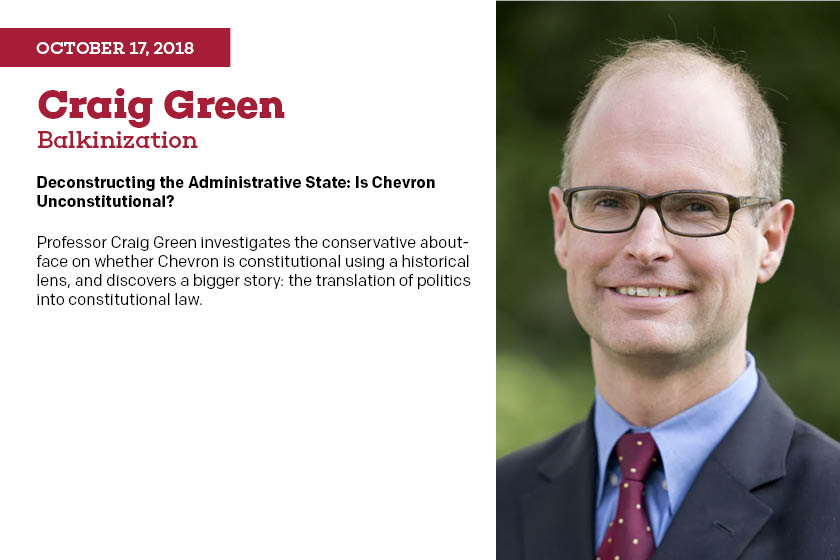
Professor Craig Green wrote a blog post for Balkinization. Read the Full Post
A DISSERTATION PRESENTED TO THE FACULTY IN CANDIDACY FOR THE DEGREE OF DOCTOR OF PHILOSOPHY RECOMMENDED FOR ACCEPTANCE BY THE DEPARTMENT OF HISTORY Adviser: Hendrik Hartog September 2018 “The rulers of Great Britain have . . . amused the people with the imagination that they possessed a great empire on the west side of the Atlantic. This empire, however, has hitherto existed in imagination only. It has hitherto been, not an empire, but the project of an empire.” Adam Smith, The Wealth of Nations 1 “A nation may be said to consist of its territory, its people, and its laws. . . . That portion of the earth’s surface which is owned and inhabited by the people of the United States is well adapted to be the home of one national family, and it is not well adapted for two or more.” Abraham Lincoln, Annual Message to Congress 2 “I take SPACE to be the central fact to man born in America, from Folsom cave to now. I spell it large because it comes large here. Large, and without mercy.” …
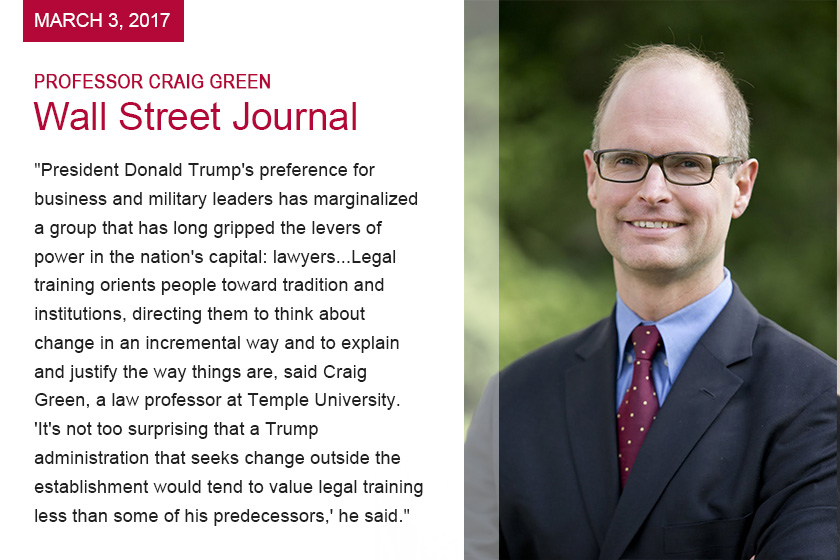
Temple Law Professor Craig Green is quoted in this article from the Wall Street Journal. Read the Full Article (subscription required)
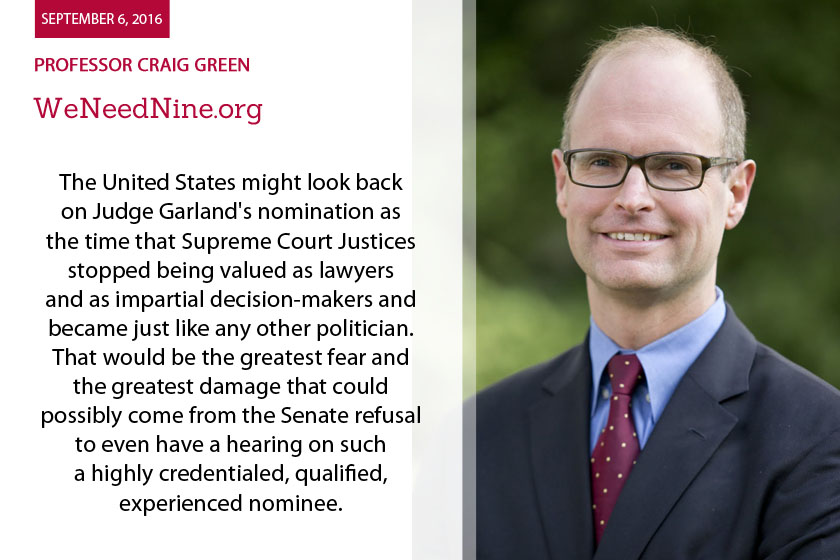
Professor Craig Green is featured in this video from WeNeedNine about why several former clerks for Supreme Court nominee Merrick Garland believe his nomination should go forward. Watch the Video

Temple University Beasley School of Law
1719 North Broad Street
Philadelphia, PA 19122
(215) 204-7861
© 2026 Temple University Beasley School of Law.