
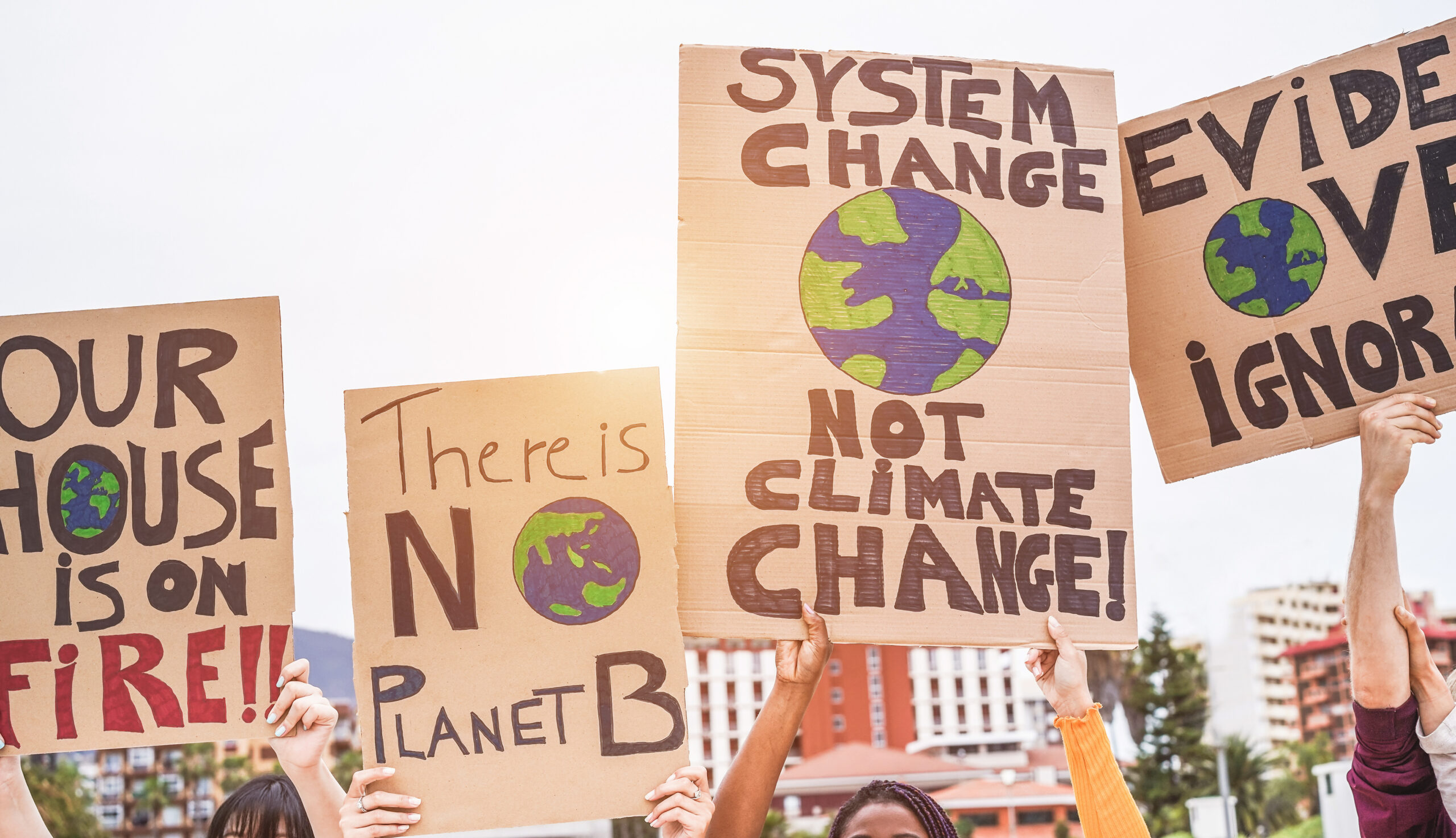
The climate crisis is often framed as a technical or policy failure: we have the wrong incentives, insufficient innovation, or weak political will. A deeper examination reveals it to be a systemic failure. The mounting evidence suggests that the core operating system of the global economy—capitalism—is programmed with a fatal contradiction: it must consume the very biosphere upon which all life depends. To believe this system can now engineer its own salvation is a dangerous illusion.
The climate emergency is not a problem for capitalism to solve; it is a verdict on its fundamental viability in the 21st century. The structural logic of capitalism—predicated on endless growth, profit maximization, and the externalization of environmental costs—is intrinsically opposed to the ecological stability required to avert catastrophe. Technological tweaks, green markets, and policy reforms within this system are not merely insufficient; they are structurally doomed to fail, making a decisive shift toward a post-capitalist economic paradigm a planetary necessity.
The Growth Imperative: A Death Drive on a Finite Planet
The non-negotiable core of capitalism is the imperative for perpetual growth. As journalist George Monbiot argues, “Capitalism collapses without growth, yet perpetual growth on a finite planet leads inexorably to environmental calamity.” This is not an incidental feature but a defining one. Firms must expand returns for shareholders,economies must increase Gross Domestic Product (GDP) to avoid recession, and the system’s stability is tied to ever-rising consumption. This logic treats the planet’s atmosphere, oceans, and forests not as a fragile, interconnected life-support system, but as an inexhaustible “extraction zone” and a bottomless “disposal zone.”
The promised escape hatch of “green growth”—where the economy grows while material resource use and greenhouse gas emissions decline—has proven to be a mirage. Studies show that after brief periods of decline, resource consumption has “recoupled” with economic growth in the 21st century. More recent research continues to question whether stringent climate policy can achieve lasting decoupling.
This illusion is meticulously dismantled by the very structure of capitalism. This ensures that efficiency gains become “launchpads for further exploitation” via a principle known as the Jevons Paradox. This paradox holds that as technological progress increases the efficiency with which a resource is used, the total consumption of that resource often rises because the lower cost encourages greater use. Whether it was more efficient coal engines in the 19th century fueling the broader industrial revolution, or more efficient data centers today enabling the massive energy consumption of cryptocurrency mining, saved resources are consistently redirected toward new avenues of consumption and accumulation.
The fantasy that we can transition fast enough to a “dematerialized” digital and service economy ignores the physical reality of our infrastructure. The energy and raw materials required to manufacture and deploy renewable infrastructure at the necessary global scale would itself cause a massive surge in emissions during the transition. This is a genuine challenge for any decarbonization effort, regardless of economic system.
However, a socialist framework offers a crucial advantage: the capacity for planned, systemic coordination that prioritizes long-term survival over short-term profit. Under capitalism, this transition emissions surge is compounded by the market’s insistence on the fastest possible return on investment, leading to rushed, inefficient build-outsand a preference for marginal expansions of existing systems rather than holistic transformation. A planned economy could sequence the transition strategically—for instance, by prioritizing the decarbonization of cement, steel, and manufacturing sectors before scaling up renewable deployment, thereby ensuring that the new infrastructure is built with low-emission materials from the start. It could also coordinate a just transition for workers in fossil fuel industries, retraining them for the very sectors needed to build the green economy, rather than leaving them to the mercy of market disruption. The surge in emissions is unavoidable; the difference is whether it is managed chaotically in service of profit, or strategically in service of survival.
Profit vs. The Planet: The Logic of Externalization and Corporate Power
The relentless profit motive creates an insatiable incentive to resist, weaken, or game any regulatory attempt to internalize costs. Market-based solutions like carbon trading are inevitably lobbied into complexity, loopholes, and ineffectiveness by the very industries they seek to regulate. They attempt to treat a symptom (by putting a price on pollution) while leaving the underlying disease intact: the corporate drive to externalize costs for competitive advantage.
This logic is embodied in the dominant actors of our global economy: transnational corporations. Under corporate law, their primary fiduciary duty is to maximize shareholder value. As Lent observes, if these legally-constructed “persons” were human, their legally-mandated pursuit of profit above all else–regardless of social or ecological cost–would qualify as psychopathic. Their power is staggering: 69 of the world’s 100 largest economic entities are now corporations, not countries. This is not an accident but a product of capitalism’s engine, which has concentrated wealth and power into entities whose singular objective is “to turn humanity and the rest of life into fodder for endlessly increasing profit at the fastest possible rate.” The creation of this capitalist elite–the modern “robber barons” of the fossil fuel, finance, and tech sectors–sets the stage for the systemic corruption of our politics.
Political Gaslighting: How Capital Defends the Status Quo
The economic power generated by capitalism translates directly into political power, which is wielded to defend the system from fundamental change. This creates the profound political failures that stall climate action. The result is what commentator Phil McDuff accurately calls political gaslighting—a “conspiracism of the elite” designed to manufacture doubt and protect vested interests.
We see this in several key strategies. First, there is the “greenlash”—a powerful political backlash against climate policies, often funded by fossil fuel interests. This includes the funding of “astroturfing” (fake grassroots campaigns) and lobbying that creates a “misperception gap,” where politicians significantly underestimate public support for climate action due to skewed pressure from well-funded lobbies.
Second, climate action is reframed through culture-war campaigns as an attack on freedom, lifestyle, or economic security. An example is the integration of materials from PragerU, a conservative media nonprofit, into Florida’s public school curriculum. The materials present fossil fuels as unequivocally positive and climate skepticism as rational. This is part of a broader effort to shape public perception from a young age and reframe the debate away from science and toward ideology.
Third, political leaders directly act as agents for this systemic logic. The Trump administration’s shuttering of climate research bodies like the National Center for Atmospheric Research, withdrawal from the Paris Agreement, and purging of climate science from government websites were not random acts but concerted efforts to remove obstacles to unfettered fossil fuel extraction and accumulation, silencing challenges to the growth-at-all-costs narrative.
This gaslighting targets the most rational responders: the youth. Movements like the school strikes for climate inherently recognize the scale of the crisis. They understand that “the level of disruption required . . . is fundamentally, on a deep structural level, incompatible with the status quo.” In contrast, the establishment offers condescension and delay. The underlying message is akin to a New Yorker cartoon: “Yes, the planet got destroyed. But for a beautiful moment in time we created a lot of value for shareholders.” The political failures are not accidents; they are the defense mechanisms of an economic system protecting itself.
The False Promises of Reform: From Policy Tweaks to Techno-Fantasies
The argument for “green capitalism” rests on the hope that the system can be reformed. The structural analysis above shows why this is a fantasy, a truth grasped by the young protestors and denied by the gaslighting establishment.
- Policy Tweaks are Grossly Inadequate: As McDuff insists, “Policy tweaks such as a carbon tax won’t do it.” While theoretically sound, in practice they are diluted and opposed by the corporate power described earlier. The scale of the crisis requires “throwing the kitchen sink at this,” which entails transformative measures like a universal basic income and large-scale public works—policies anathema to a system built on labor discipline and austerity. A rapid transition away from fossil fuels will necessarily render vast swaths of the economy—and the jobs within them—obsolete. Coal miners, oil rig workers, and countless others in carbon-intensive industries face displacement. Under capitalism, this translates into desperate political opposition to climate action, as workers fear for their livelihoods. A universal basic income, funded by the immense public savings from socializing energy and healthcare, would sever the link between survival and wage labor in destructive industries. It would provide a material floor that makes it politically possible to phase out these industries quickly, while also cushioning the social shock of transition and giving people the freedom to retrain, care for families, or participate in democratic planning. Combined with large-scale public works—guaranteed green employment in retrofitting buildings, expanding public transit, and restoring ecosystems—it transforms climate policy from a threat to livelihoods into a genuine engine of shared prosperity.
- Technological Salvationism Fails on Timing, Scale, and Logic: The market’s requirement for short-term profitability is incompatible with the massive, coordinated, long-term investment a global energy transition requires. Venture capital seeks high-return software applications, not 40-year public grid overhauls. This failure is codified in the models of the Intergovernmental Panel on Climate Change (IPCC), which often rely on fantastical levels of future carbon removal (sucking CO₂ directly from the air) as more plausible than modeling a planned reduction in global GDP. The system’s models literally cannot compute a future without growth.
- The Endpoint is Geoengineering: When market reforms and green growth narratives fail, the logical endpoint is the techno-dystopia of geoengineering–like solar radiation management (SRM), which involves spraying reflective particles into the stratosphere to cool the planet. Attractive to capital because it wouldn’t disrupt growth,such schemes carry colossal risks (e.g., disrupting regional weather patterns) and would lock humanity into permanent, risky planetary management to avoid instant, catastrophic warming if stopped. It is the ultimate expression of capitalism’s hubris: an attempt to engineer a technical fix for a systemic crisis.
Confronting the Political Reality: Is a Socialist Alternative Possible?
This analysis leads to an inescapable conclusion: a system built on growth and profit cannot solve a crisis caused by growth and profit. The alternative must be a system built on opposing principles: democratic planning, collective ownership, and the subordination of economic activity to social and ecological need. This necessitates a socialist framework.
However, a major critique must be acknowledged: proposing socialism as a solution risks comparing an ideal, unimpeded model with the messy, politically-constrainedreality of capitalist reform. Won’t the same fossil fuel “robber barons” and corporate power that have successfully killed carbon pricing fight tooth and nail to prevent a transition to socialism? Absolutely. This is not a simple switch, but a recognition that the climate struggle is inherently a struggle for power.
The political gaslighting and greenlash are evidence of that battle already raging. The socialist argument is that only a movement aiming for systemic change can build the counter-power necessary to overcome these entrenched interests. Reformist measures, because they leave economic power intact, are perpetually vulnerable to sabotage and rollback. The goal is not to wish away political conflict but to reshape the economic terrain on which it is fought.
Toward a Necessary Alternative: A Total Rethink for a Livable Future
A socialist approach to the climate crisis is not a single policy but a restructuring of economic priorities.
- Socialization of Key Sectors: This means bringing sectors like energy, transportation, and heavy industry under public, democratic ownership. Private utilities have a fiduciary duty to shareholders that often conflicts with a rapid fossil fuel phase-out (e.g., engaging in astroturfing to protect assets). A democratically managed energy grid could prioritize renewable build-out based on scientific necessity, not profit margins, and guarantee energy as a public right.
- Democratic Economic Planning: We must move beyond GDP–which counts ecologically destructive activity as a positive–and implement planning informed by ecological boundaries, like Kate Raworth’s “doughnut economics.” Through democratic institutions, societies could plan a “managed reduction” of material consumption in the Global North, scaling down destructive industries while scaling up green infrastructure, public transit, and regenerative agriculture.
- A Just Transition Embedded in Structure: Socialism provides the only coherent basis for climate justice. It can de-link livelihood from wage labor in destructive industries by guaranteeing green public employment and basic services. By recognizing the ecological debt owed by the industrialized North to the Global South–for historically disproportionate emissions and resource extraction–it mandates the free transfer of technology and resources to support sustainable development elsewhere. Capitalism’s competitive logic makes such redistribution impossible; socialist solidarity makes it foundational.
Conclusion
The climate crisis is the ultimate indictment of an economic system that prizes capital accumulation above all else. The political failures–the greenlash, the misperception gap, the gaslighting–are the defense mechanisms of that system. To believe the system that caused the crisis can now solve it is a profound error.
Therefore, the fight for a livable future is inextricably linked to the fight for a new social order. The question posed by the school strikers is strategic: we cannot save their future while preserving the economic system destroying it. The socialist alternative–with its commitment to democracy, planning, equality, and ecological stewardship–is no longer a utopian ideal but a practical necessity. It is the only framework that matches the scale of the crisis while offering a just path forward.
Building the power for this transition is the defining task, requiring broad coalitions to confront entrenched capital. The path forward is not to navigate around capitalism but to transcend it. Our choice remains, as Monbiot framed it: stop life for capitalism, or stop capitalism for life. The only rational, moral, and survivable answer is to choose the latter.
