All posts tagged: climate change

Market Failures: Pricing Carbon with Wishful Thinking

Consider two numbers assigned to the same ton of carbon dioxide, each claiming scientific validity. The first: a figure between $1 and $7, representing the first Trump administration’s calculation of the societal damage caused by each ton of CO₂. The second: $190, representing the Biden administration’s calculation for that identical quantity of carbon. This metric, the social cost of carbon (SCC), is a single number meant to represent the total harm—from crop losses to health problems to sea-level rise—caused by emitting one ton of carbon dioxide. It has become a central battleground in U.S. climate policy. The usual explanation for this whiplash is political: one side follows science while the other ignores it. But that story misses a more fundamental problem. The first Trump administration didn’t need to deny climate science to gut the SCC—it simply exploited the metric’s built-in manipulability, using established government guidance to select assumptions that minimized the result. By changing just two parameters—the discount rate and geographic scope—the administration reduced the figure from $51 to between $1 and $7 per ton, …
China’s Climate Paradox

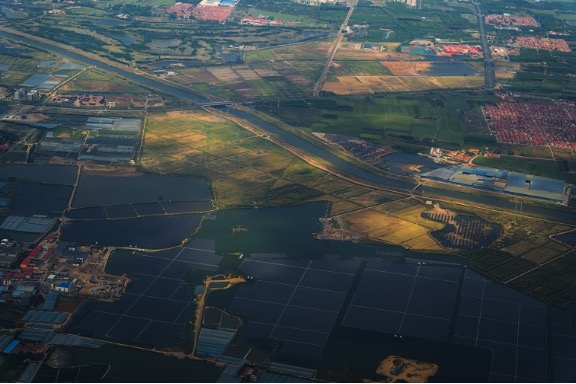
China burns more coal than the rest of the world combined. It also manufactures more than 80% of the world’s solar panels and may have already peaked its emissions years ahead of schedule. It accounts for roughly a third of global CO₂ emissions—more than the United States, the European Union, and Japan combined. Yet under the United Nations Framework Convention on Climate Change (UNFCCC), the treaty that has governed international climate negotiations since 1992, it sits in the same legal category as Burundi, Somalia, and the Central African Republic: “developing.” That classification is not simply wrong. China’s per capita emissions remain well below those of the United States, and roughly a quarter of its population (some 350 million people) still lives in poverty by the World Bank’s measure. But the label is not adequate either. The UNFCCC’s binary framework (developed countries in one column, developing in the other) was never built to accommodate a country that belongs, however imperfectly, in both—and its governing principle, common but differentiated responsibilities (CBDR), offers no middle ground. Cass Sunstein’s …

The Biden Pivot

The Institute for International Law and Public Policy presents “The Biden Pivot” | Student Commentary

On April 8, 2021, The Institute for International Law and Public Policy presented “The Biden Pivot,” a panel of experts who discussed where, and how, the Biden Administration will reverse course on international policies set by the previous administration. Panelists included Duncan B. Hollis, Laura H. Carnell Professor of Law; J. Benton Heath, Assistant Professor of Law; Amy Sinden, Professor of Law; Jaya Ramji-Nogales, Associate Dean for Academic Affairs and I. Herman Stern Research Professor. The panel was moderated by Margaret M. deGuzman, James E. Beasley Professor of Law and Co-Director of the Institute for International Law and Public Policy.  Temple Law continues to step up and offer really amazing events on international law and policy. Throughout this year, the Institute for International Law and Public Policy and the student-led International Law Society has continually hosted meaningful discussions that allow students such as myself to engage with Temple Law’s international faculty. As an aspiring international lawyer, the access I’ve been given to these world-renowned scholars has been incredible. I regularly talk with Professor Heath after …

Looking Ahead at Climate Change and Federal Policy

It has been a rough six months for climate change advocates. The policy changes from former President Obama to the new Trump Administration have been like night and day. In an effort to help digest these changes, Temple Law School’s Sheller Center for Social Justice hosted its fourth lecture in a series titled Making Sense of the Legal Headlines, focusing this time on Climate Change and Federal Policy. Temple Law Professor Amy Sinden facilitated the lecture, with assistance from third year law student Alec Zucker. Professor Sinden and Mr. Zucker did an excellent job at summarizing the major concerns associated with the current climate change crisis while bringing the audience up to speed regarding recent policy changes from our nation’s capital. With regard to the climate crisis, the bad news is that global temperatures are continuing to rise in the aggregate (2016 was the hottest year globally on record), and the change goes beyond warming. It includes both more extreme and more unpredictable weather patterns—droughts, floods, snow storms, heat waves, wildfires and so on. As …