
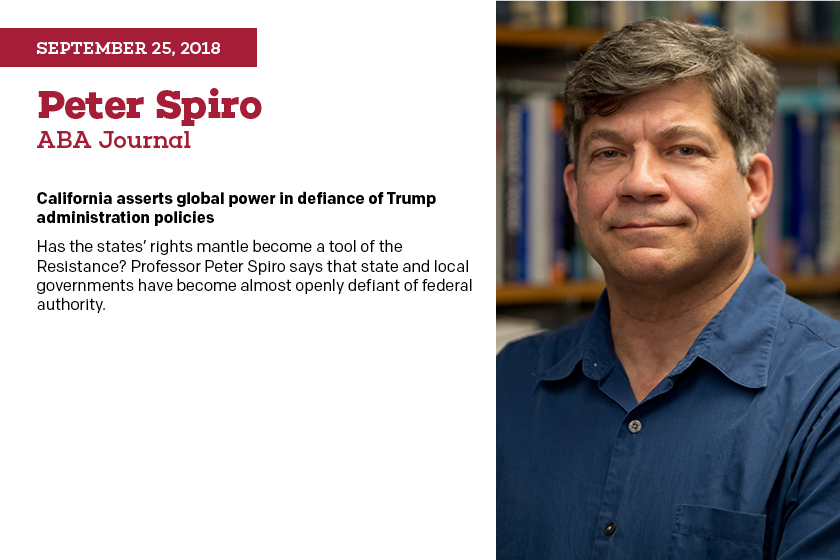
California Asserts Global Power in Defiance of Trump Administration Policies
Professor Peter Spiro is quoted in this article from the ABA Journal. Read the Full Article
Professor Peter Spiro is quoted in this article from the ABA Journal. Read the Full Article
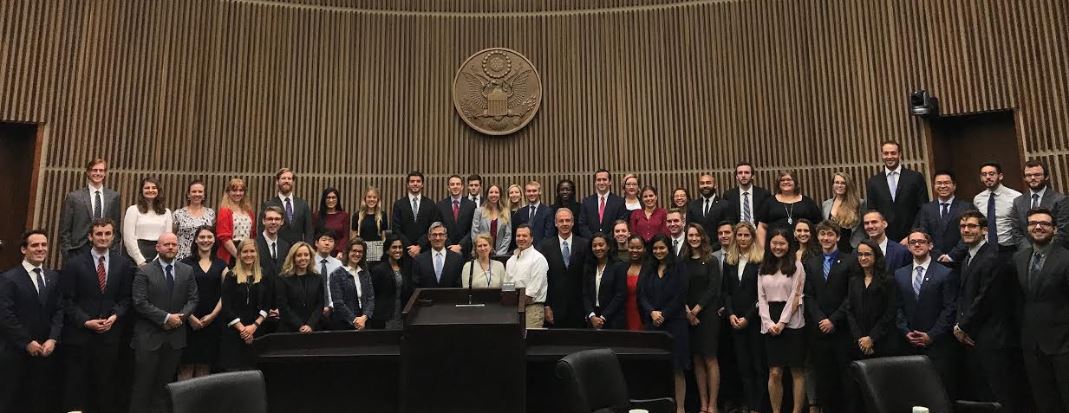
The beginning of 1L year can be tough – for three weeks we delved into Bluebook citations, criminal law, contracts, and torts. In addition, we were introduced to the judicial system and the mechanics of both criminal and civil litigation in our Litigation Basics class. Over the course of nine classes, we learned about the procedure involved while taking a case to trial and even drafted a hypothetical complaint. Throughout the course, we enjoyed hearing Professor Jacobsen’s “war stories” about his own experiences as a litigator. To celebrate “completing our first law school course”, Professor Jacobsen took our class to visit the James A. Byrne United States Courthouse in Center City. The courthouse was impressive, and it was very exciting in particular to visit the Third Circuit Court of Appeals. Seeing the courtroom gave us the opportunity to apply everything we learned in Litigation Basics about courtroom procedures, including where each party sits during a trial. At the courthouse, we got to meet the Honorable L. Felipe Restrepo, Judge of the Third Circuit Court of Appeals and …
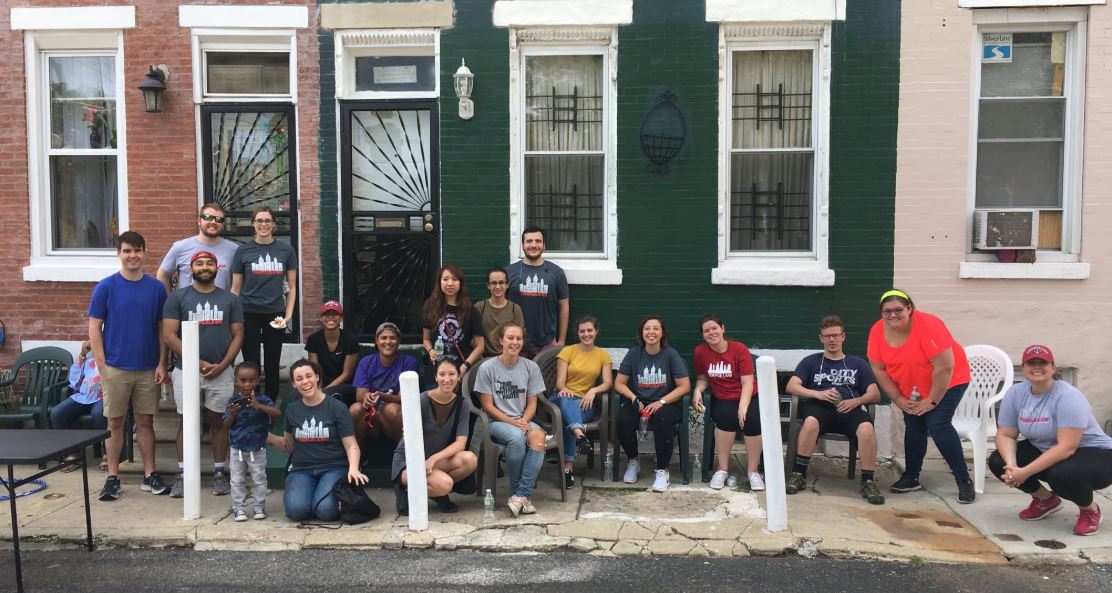
After a busy week of orientation, I was excited for the opportunity to get out of the classroom and participate in the 1L Community Service Project. I viewed it as an opportunity to discover the neighborhood where I am starting my legal career while giving back to the community. It was also an opportunity for me to connect with a smaller section of students that are service oriented. I knew coming into law school that I am a service-oriented individual and value public interest work; community service is one of the many ways to assist others. We volunteered with cleaning up a community maintained children’s park and the surrounding blocks. We painted fences, mowed grass, picked up trash, and cleared sidewalks from debris. After a few hours of work our host, Denise Armstrong, offered us beverages, snacks, and I finally had City View pizza. I am happy that I was able to connect with my fellow students in a relaxed environment and see the immediate impact of hands-on work.

This summer I had the amazing opportunity to be an Ella Baker Intern at the Center for Constitutional Rights in New York City. CCR is a legal organization whose work is centered on supporting social movements. This means that, at CCR, lawsuits are not simply about who wins and loses in the courtroom, but how legal work can support wider systemic change. The Ella Baker program is named after one of the most brilliant strategist and organizers of the Civil Rights Movement and carries forward her work by equipping young lawyers with the necessary tools to become movement lawyers. I, along with 11 other law students and two undergraduate interns from across the country, started the program with an exercise asking four questions: Who are the people who inspire us to do social justice work? What is our superpower? What was our “aha moment” that led us to law school and CCR? What we each do to relax? The people who inspire me have always been my family and my community in the Bronx. I …
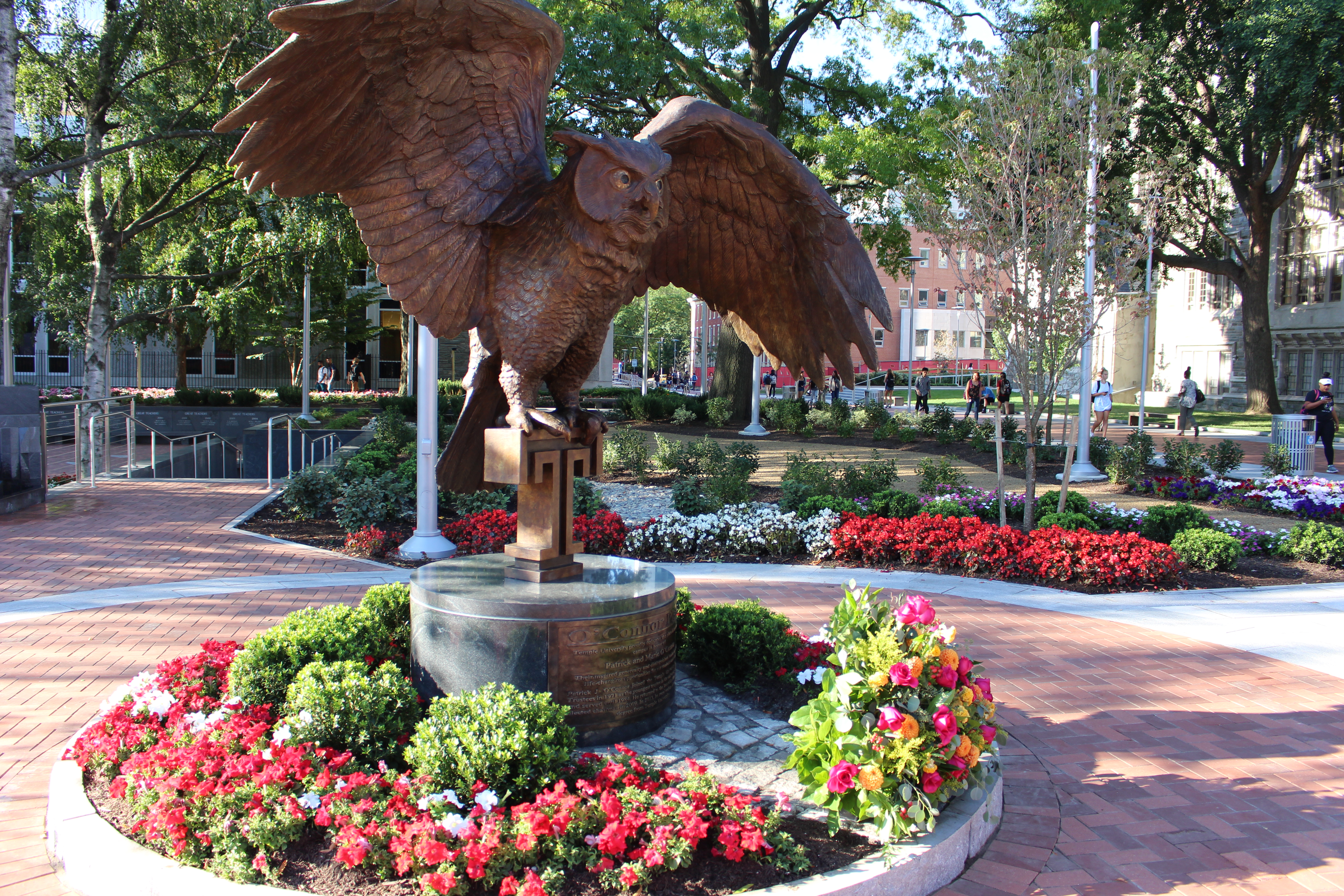
Temple Law students use their summer months to relax, catch up on reading, take classes, study abroad, and to gain necessary skills and experiences by working outside of the law school. We asked three law students where they worked this summer and what they learned: Adetola Ajayi, LAW ‘19 There is no substitute for real legal experience. My summer experience was nothing short of amazing. I split my summer at the Philadelphia City Law Department and Archer Law in Haddonfield, New Jersey, through the Temple-Archer Diversity Scholarship program. Archer’s program provided me the opportunity to gain insights into both the public and private sectors of law. At the City Law Department, I worked in the Civil Rights Unit and was able to attend state and federal trials, write memos, and observe settlement conferences and depositions. I learned about topics such as 42 U.S.C. § 1983, qualified immunity, and the spoliation of evidence. During the second half of my summer at Archer, I conducted research and drafted memos. My assignments were from various practice areas including …
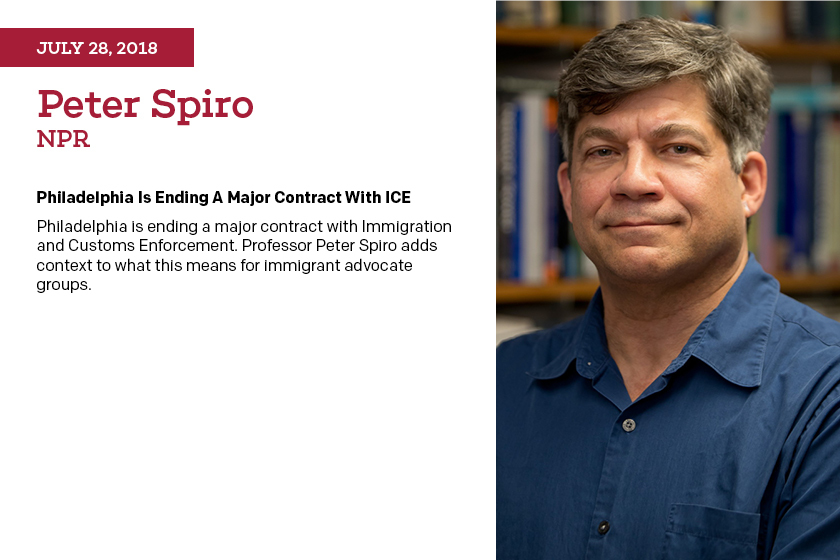
Professor Peter Spiro provides insight on local immigrant advocacy victory for NPR. Read the full article here.

Like so many of my fellow citizens, I have been deeply troubled by the “family separation” policy recently enacted by the Trump administration in furtherance of its stated goal of curbing illegal immigration. The vast majority of these families arrived at our southern border seeking asylum from unspeakable violence, persecution, and poverty in their home countries. That they are then subjected to an official policy of our government that is callously indifferent to their suffering, or to the harm visited upon children from being forcibly removed from their parents, has been conscience shocking to me as an American. As a lawyer, however, I am equally aghast that the government has apparently separated these families without any semblance of due process as guaranteed by the Fifth and Fourteenth Amendments of the United States Constitution. After all, the right to the parent child relationship is a fundamental one, and has been described by our Supreme Court as “essential,” the “basic civil rights of man,” and a right “far more precious . . . than property rights.” Stanley …

In May, Danielle DerOhannesian ’18, Hwui Lee ’18, and Alison Smeallie ’19 traveled to The Hague, Netherlands. Over a period of five days, they conducted oral arguments and presented briefs about human trafficking in the shrimp industry in the country of Northeros. The country, like the victims—and all allegations in the case—are fictional. The setting of the final round, however, was an actual courtroom of the International Criminal Court (ICC), and actual ICC judges adjudicated the fictional case. The Temple Law squad was one of two teams representing the U.S. in the international round of the International Criminal Court Moot Court Competition. The other U.S. team is fielded by Johns Hopkins University School of Advanced International Studies. The teams won the honor of representing the U.S. in March, when students from 15 U.S., Canadian, and Guatemalan universities convened at the annual regional competition, held at the Elisabeth Haub School of Law at Pace University in White Plains, NY. While Temple ICC Moot Court teams have advanced to the semi-final round three times in the past …

Temple Law has a proud history of cultivating outstanding graduates. For the Bradley family however, cultivating outstanding graduates is a family tradition. In 2014, eldest sister Eleanor Bradley graduated from Temple Law. When her younger sisters starting thinking about applying to law school, “It was a no-brainer for me to encourage them to choose Temple,” she said. In 2015, Eileen, the youngest Bradley sister, applied and started her law school career, followed in 2016 by middle sister Marianne. All three sisters were present at Temple Law’s 2018 Commencement ceremony to celebrate Eileen’s graduation. As a returning alumna, El, along with Dean Mandel, was able to present the diploma to her sister, something Marianne can look forward to next year. The sisters shared their thoughts on this unique family tradition: Eileen Bradley LAW ’18 My time at Temple Law has been invaluable. At Temple I have gained the practical skills I will need this upcoming fall as I begin my legal career, but I’ve also had the privilege of being part of the Temple Law community …
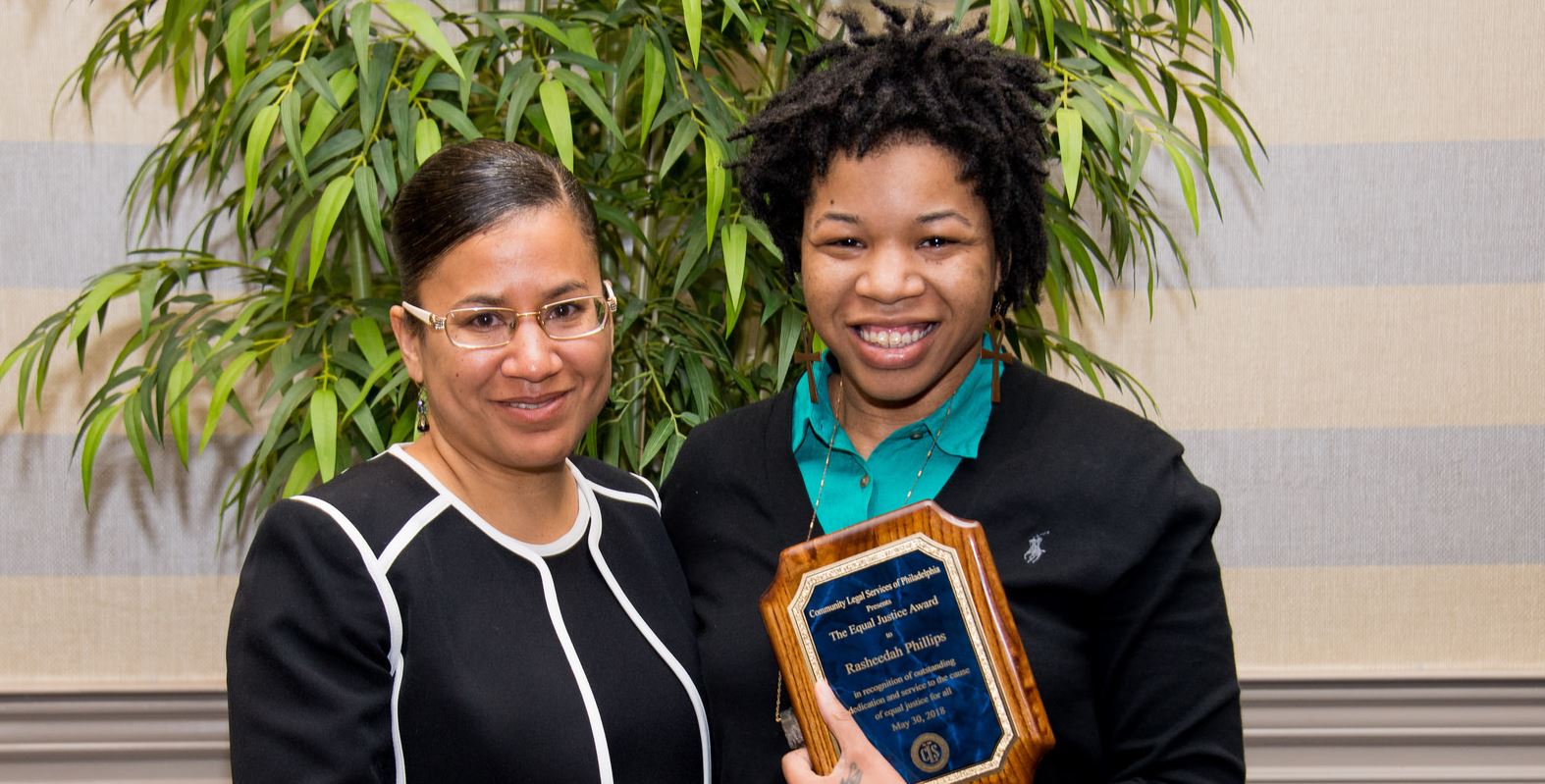
Before law school, I was a community organizer for the Children’s Defense Fund, a national child advocacy organization founded and directed by the extraordinary and inimitable civil rights lawyer Marian Wright Edelman. In her book, Lanterns: A Memoir of Mentors, Edelman writes of “the crucial influences of the natural daily mentors” in her life, whom she refers to as “lanterns” who lit her path from her small hometown in Benettsville, South Carolina, to Spelman College, to Yale Law School, to the front lines of the civil rights struggle, to the founding of the Children’s Defense Fund. Like Edelman, the path of my own career has been lit by mentors, who showed me what was possible and bolstered my confidence along the way. I would not have decided to attend law school or pursued a public interest career were it not for my own mentors. And I have done my best to light the path of others. I am grateful that my role as a clinical professor at Temple Law affords me an ongoing opportunity to …

Temple University Beasley School of Law
1719 North Broad Street
Philadelphia, PA 19122
(215) 204-7861
© 2026 Temple University Beasley School of Law.