Archives

Center of Compliance and Ethics brochures on a deck

Ethics Awareness Month

March, which marks Ethics Awareness Month, gave us at the Center for Compliance and Ethics the opportunity to reflect on the importance of organizational ethics. Unethical behavior damages organizational reputations, lowers employee morale, and erodes public trust. Effective compliance and ethics programs built on an ethical culture and led by compliance and ethics officers are essential to the success of any organization. The role of a compliance and ethics officer today is interesting and complex, necessitating an understanding of law and regulatory expectations, the drivers of organizational culture and individual behavior, and the ability to grasp evolving business strategies.  Compliance and ethics is also a rapidly growing profession, projected to increase in the U.S. alone by 4.6 percent between 2019 and 2029. In recognition of these trends, Temple Law established the Center for Compliance and Ethics in 2015 with the goal of improving the understanding and practice of compliance and ethics across disciplines, industries, and sectors.  The Center o­ffers a comprehensive compliance and ethics curriculum, experiential learning opportunities, and summer fellowships to students and executive …

Then & Now: Immigration Legal Advocacy at the Mexico-U.S. Border

Part one of a two-part post on the changing asylum landscape under the new administration. The Biden administration has signaled its intention to repair the U.S. asylum system. As law students who worked directly with asylum-seeking families, this is welcomed news. Over the last four years, the Trump administration intentionally increased the hardships that asylum seekers face. It adapted harsh, inhumane immigration policies with the express goal of deterring people from seeking asylum in the U.S. One such policy was the Migrant Protection Protocols (MPP), also known as the “Remain in Mexico” program. This policy treated displaced persons, including women, infant children, and the elderly, as dangerous adversaries that the country must defend itself against, and it caused widespread and profound human suffering at the U.S.-Mexico border. MPP is a Trump-era policy enacted in January 2019 which, for the first time, required asylum seekers to wait for their asylum hearings outside the United States at the U.S.-Mexico border. This policy impacted tens of thousands of asylum seekers. They were forced to build makeshift refugee camps …

Human Rights Protections Through International Criminal Law

One of the tools in the toolkit of human rights protection is international criminal law. However, application of this body of law is generally limited to the most serious human rights violations: atrocity crimes. In her recent book, Shocking the Conscience of Humanity: Gravity and the Legitimacy of International Criminal Law, Professor deGuzman examines what it means for crimes to be so grave that they concern all of humanity. She shows that the concept of gravity remains highly undertheorized, and uncovers the consequences for the regime’s legitimacy of its heavy reliance on this poorly understood idea. She argues that gravity’s ambiguity may at times enable a thin consensus to emerge around decisions, such as the creation of an institution or the definition of a crime, but that, increasingly, it undermines efforts to build a strong and resilient global justice community. Having elucidated the consequences of the regime’s reliance on the ambiguous idea of gravity, Professor deGuzman suggests how gravity could be reconceptualized to take account of global values and goals in the various decision-making contexts …

Reflections on AIDS Awareness Month and the Case for Public Health Law Research

As we observe AIDS Awareness month this December, we find ourselves looking back on the most challenging year from a public health perspective in at least a century. The current pandemic places all of us at the direct crossroads of public policy and public health in a daily reality unrivaled in most of our previous experience. Thinking about the impact of school and business closures, restrictions on gatherings and travel, mask mandates, and how to distribute vaccines highlight just a few of the law and policy responses we now interact with to keep ourselves and each other safe. As we pause each year to recognize those living with HIV, and remember those lost to AIDS, the condition caused by the virus, we must also remember that we suffer many of those losses, especially the early ones, because of the original failures of the public health response to the HIV epidemic. These failures included but are not limited to a minimization of the government’s role in public health response and related delays to address the spread …

Dear Justice Barrett

Dear Justice Barrett, I hear that you will be asked to recuse yourself in the upcoming voting litigation about the presidential election. Here are my thoughts on how to rule on those requests: You have received an appointment for life. Now is the time that you start to prioritize your independence, your role in protecting the Court as an institution held in great respect among our citizens and the rest of the world, and yes, selfishly–your own legacy. *Independence: Your own view of whether you lack personal bias or prejudgment in these voting cases is only part of your consideration. The self-proclaimed independence of Justices does not fully satisfy the importance of judicial independent decision making. The public’s view of your independence is crucial. You were selected from the sea of hopeful qualified candidates by a man who announced that you would likely decide cases assisting him with holding onto the presidency. I understand that you did not have control over what this man was saying. But his announcement is part of the facts that …

Unpacking the Race, Gender, Disability and Class Implications of Juvenile Detention Decisions

Race, gender, disability and class based injustices happen to our nation’s teens every day, in the mundane decisions that probation officers, caseworkers, and judges make, usually out of public view. An article in Pro Publica documents a judicial decision to detain a 15-year-old Black girl for violation of her probation. The violation involved her failure to properly attend her online school program and keep up with her assigned homework. The judge, citing a “zero tolerance” for probation violations, incarcerated her in May, 2020, in the midst of a massive disruption to the school lives of every American teenager. The decision was made without testimony by the girl’s special education teacher, who had to leave the online hearing to fulfill her other teaching duties. Studies make clear the disproportionate impact of race in all aspects of the juvenile justice process. Those involved in the process tend to see Black teens as more mature and therefore more culpable for their behavior than white teens of the same age. Juvenile detention also disproportionately impacts teens diagnosed with ADHD …

Temple Law Faculty Reacts to the Trump v. Mazars USA and Trump v. Vance Decisions

On July 9, 2020, Chief Justice John Roberts delivered a 7-2 opinion in Trump v. Mazars USA, refusing to enforce congressional subpoenas that sought President Trump’s tax returns and other financial records about himself, his children, and affiliated businesses. On July 9, 2020, Chief Justice John Roberts delivered a 7-2 opinion in Trump v. Vance, allowing state prosecutors to subpoena financial records concerning President Trump and his businesses. Craig Green Professor of Law Trump v. Mazars USA: Just months before the presidential election, the Supreme Court declined to enforce subpoenas that could have publicly revealed President Trump’s tax returns and financial conduct. Congressional committees demanded various financial records using their “legislative power,” seeking to investigate the need for possible statutory reform about corruption, terrorism, money laundering, or election interference. One committee also claimed oversight power to investigate executive misconduct. Mazars is the first time that any Supreme Court examined a congressional subpoena for a President’s personal information. The majority created a new “balanced approach” that tried to respect the long history of congressional subpoenas without …

Temple Law Reacts to the June Medical Services, LLC v. Russo SCOTUS Decision

On June 29, 2020, Supreme Court Justice Breyer delivered the 5-4 opinion in June Medical Services, LLC v. Russo, holding that Louisiana’s Unsafe Abortion Protection Act, requiring doctors who perform abortions to have admitting privileges at a nearby hospital, is unconstitutional. Rachel Rebouché Associate Dean for Research Professor of Law Generally, this is a win for abortion supporters, and a decision many did not expect. Justice Breyer relied heavily on the factual record developed by the District Court and ruled that the law was the same in its effect and purpose as the Texas law struck down in 2016. Chief Justice John Roberts wrote a concurrence, ruling on grounds of stare decisis and providing the 5th vote needed to strike down the restriction. His concurrence is quite narrow, though, and it suggests that the Chief Justice interprets prior caselaw as giving far more deference to states than the Court’s 2016 ruling did. Adrienne R. Ghorashi, Esq. Program Manager Center for Public Health Law Research This SCOTUS decision reaffirms what was already established 4 years ago …

Temple Law Faculty React to the Department of Homeland Security v. Regents of Univ. of California SCOTUS Decision

On June 18, 2020, Chief Justice John G. Roberts Jr delivered the 5-4 opinion in Department of Homeland Security v. Regents of Univ. of California,  holding that DHS’s decision to rescind the Deferred Action for Childhood Arrivals program, known as DACA, was arbitrary and capricious under the Administrative Procedure Act. Jennifer J. Lee Associate Clinical Professor of Law For the over 600,000 DACA recipients across the country, the Supreme Court’s decision is essential in providing them with a temporary reprieve. While eventful, today’s decision solely ruled that the Trump administration’s rescission of the program was improper based on procedural grounds. The reality, therefore, is that any presidential administration in the future can wipe out the DACA program so long as it does so with proper procedure. For this reason, DACA recipients are continuing to fight for a more permanent pathway to citizenship. As DACA recipients have ample support, the challenge is not in getting such a law enacted. Rather, they want a “clean” law that does not otherwise include harsh enforcement provisions against the immigrants …

Sheller Center Students File Tort Claims for Families Separated at the Border

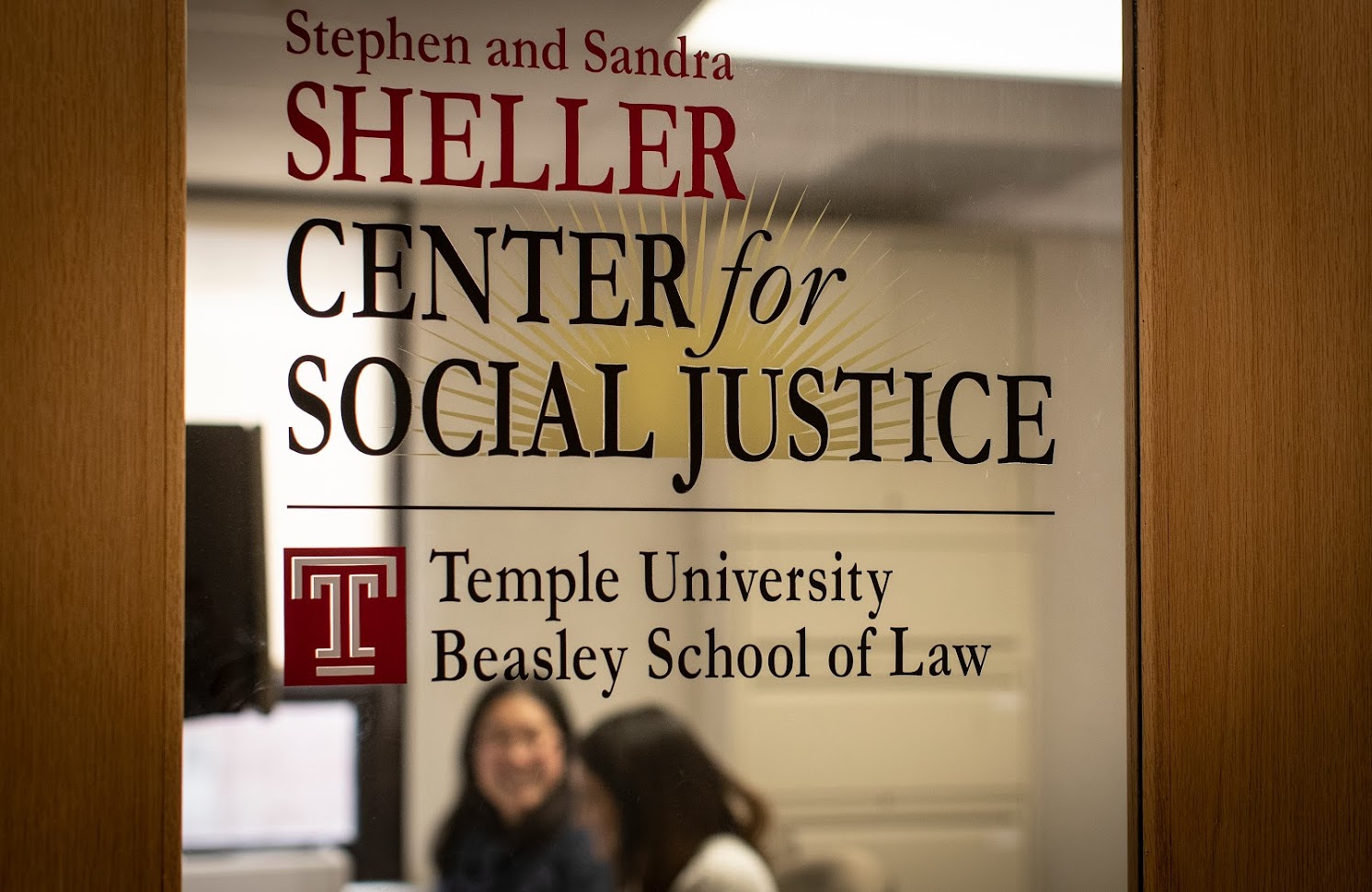
The Trump administration has engaged in a policy of family separation, which it ramped up in 2018. Under that policy, families apprehended for crossing the border outside of a port of entry were forcibly separated. Parents were placed in adult detention while their children were sent to shelters for unaccompanied minors. They were frequently subjected to cruel conditions of confinement, including overcrowding and the inability to obtain adequate nutrition, hygiene, medical care or mental health services. Notably, the administration expressly announced its family separation policy as a tactic to deter Central American migrants from seeking safety in the United States. In these facilities, parents and children endured weeks or even months without contact with one another. Parents and their children did not know when or if they would be reunited because immigration officials would not provide any information. The separation of parents from their children has predictably caused significant and long-lasting trauma to these families who had sought refuge in the United States. Through the Sheller Center for Social Justice, we represented eight families in …