Archives

Temple Law Faculty React to the Bostock v. Clayton County, Georgia SCOTUS Decision

On June 15, 2020, Supreme Court Justice Neil Gorsuch delivered the 6-3 opinion in Bostock v. Clayton County, Georgia, holding that employment discrimination on the basis of sexual orientation or gender identity is prohibited under Title VII. The landmark decision is widely viewed as an historic moment in the movement for LGBTQ equality. Leonore F. Carpenter Associate Professor of Law Don’t underestimate the enormous power of this decision. Everyone loved the marriage decisions because everyone loves love. But frankly, not everyone has any desire to get married. However, in a nation with a fraying social safety net, job security is absolutely critical to all of us, particularly those on the economic margins. In my mind, this decision is at least as important as Windsor or Obergefell.   Ellie Margolis Professor of Law The Bostock decision is a huge victory for legal equality in this country. It will provide a measure of security to countless LGBTQIA workers who no longer have to fear losing their jobs because of who they are or who they love. The …


A Day at the High Court of Uganda

For most of this program, I am the sole lecturer, and our days are taken up with typical Trial Advocacy coursework – directs and crosses; openings and closings; basic trial skills; depositions and mediation.  This past Thursday morning, however, the program brought in a guest speaker to speak about technological developments related to African courts.  While I’m sure I could have learned a great deal from the speaker, I used this as an opportunity to sneak off to the Ugandan High Court. The High Court building is surrounded by a high, guarded gate and barbed wire, but is open to the public nonetheless.  The High Court serves as the trial court level for significant criminal cases in Kampala, the Ugandan capital.  Lesser criminal offences start off in magistrate courts elsewhere.  I am told the High Court hears appeals as well. Still, given that the population of Kampala is a little larger than Philadelphia, the building struck me as small.  As near as I could find, there were only 6 courtrooms, and only one of them …

Parental Visitation Rights and Tragic Outcomes

The outcry over a decision that let a child have a weekend visit with her father, an action that led to the child’s death, includes cries for the judge’s removal and a call from the Governor for an inquiry by the Judicial Conduct Board. As we show below, this response misses the boat in two regards – the protection of judicial independence and the need to change the law.   Professor Jules Epstein addresses the former; Professor Sarah Katz the latter. JUDICIAL INDEPENDENCE We live in a world where the judiciary is under attack, with cries that “our legal system is broken” and that judicial decisions put our country “in peril.”  But we want and need judges to make tough decisions without looking over their shoulders.  And we want lawyers to be able to go into court on new cases without fearing that the judge will make a harsh decision to ‘look tough’ and appease the critics. Judicial misconduct warrants sanctions.  Lying, stealing, doing favors; not showing up for work; or being racist, sexist or otherwise hostile …

Liberty and Justice: Moving from Some to All

When the Democratic National Convention was in Philadelphia, I was interning during my 1L summer at the ACLU of Pennsylvania. ACLU-PA had sent the ACLU of Ohio a care package to survive the Republican National Convention, so ACLU-OH returned the favor. It contained the following magnet: I snagged it—it remains on my fridge. Like many of us, I grew up pledging allegiance to a flag that is supposed to represent ideals of liberty and justice for all. I decided to go to law school after I began to recognize the extent of our generational failure to achieve those ideals. One barrier in moving toward justice for all is the desperate lack of legal representation for those who cannot afford justice. Choosing public interest law is typically not a wise financial decision; I have had the privilege of being able to do so, knowing my first salary will be less than half that of some of my classmates, and even less than my first teaching salary was ten years ago. Temple Law gave me the privilege of …

A Reflection on Justice

For her undergraduate thesis in criminal justice, Nicole Gonzalez Van Cleve organized court watchers in Chicago’s Cook County courthouse. She hoped to create an ethnography of America’s largest courthouse across thousands of hours of interviews and first-person observations. More than a decade later – and now as Professor Gonzalez Van Cleve – she published these observations as Crook County: Racism and Injustice in America’s Largest Criminal Court. Professor Gonzalez Van Cleve spoke about her recent publication on November 9th here at the Beasley School of Law, alongside Professor Hosea Harvey of Temple University. Employing an interrogative style, Professor Gonzalez Van Cleve began by presenting some of the results of her research. As an ethnographer, Gonzalez Van Cleve pointed out that language in her field functions both as indicator and as an active, purposive agent. She was particularly interested in the way that language – specifically racially coded language – worked in court communities and the justice system itself. In this way Professor Gonzalez Van Cleve’s Crook County expands on the work of Michelle Alexander’s The …

Feminist Judgments & The Future of Reproductive Justice

One of the most memorable moments in a typical 1L student’s constitutional law class is the discussion around Roe v. Wade and the Supreme Court’s treatment of the often controversial rights surrounding reproductive health and wellbeing. On November 13th, the students at Temple Law had the opportunity to hear directly from Sarah Weddington (lead counsel on Roe v. Wade) and Kathryn Kolbert (lead counsel on Planned Parenthood v. Casey). The panel, which also featured Professors Kim Mutcherson, Elizabeth Kukura, and David Cohen, focused on the questions presented by moderator Professor Kathryn Stanchi’s book Feminist Judgments: Rewritten Opinoins of the United States Supreme Court. The book poses the question “what would United States Supreme Court opinions look like if key decisions on gender issues were written with a feminist perspective?” It seeks to answer this question through a series of rewritten Supreme Court opinions on issues of gender, penned by scholars and lawyers. The panel began with Professor Kim Mutcherson, professor at Rutgers School of Law in Camden and author of the book’s rewritten Roe. Professor …

Professor Jules Epstein on the Amtrak Derailment and Private Criminal Complaints

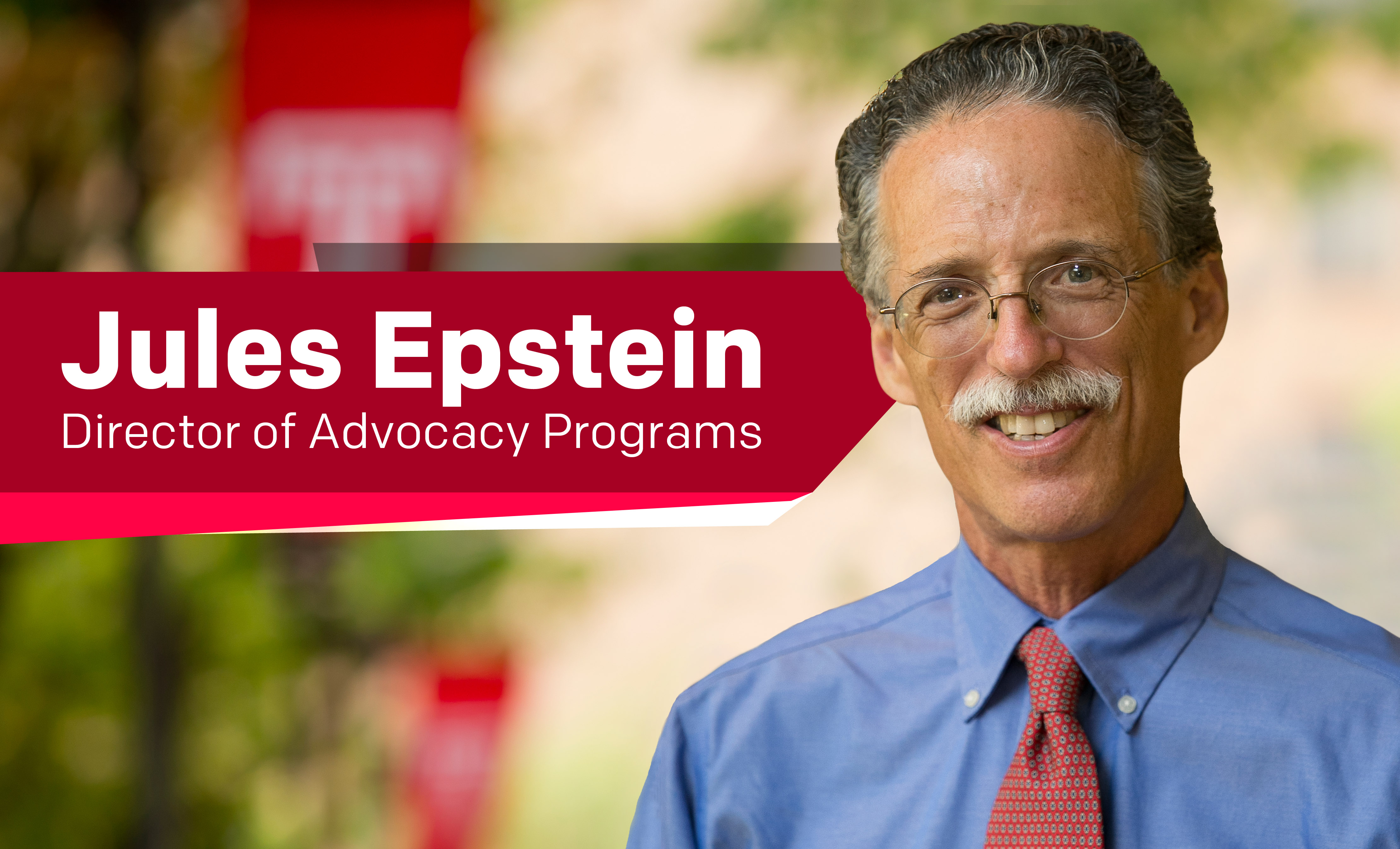
Director of Advocacy Programs Jules Epstein, a national authority on Criminal Procedure and the Law of Evidence, has been an influential voice in the unfolding story of whether charges will be brought against Amtrak engineer Brandon Bostian in the 2015 derailment that killed eight and injured hundreds. Prosecutors reverse course and file charges against engineer in 2015 Amtrak crash Washington Post, May 15, 2017 “Relatives of a victim of the deadly 2015 Amtrak crash have used a little-known provision of Pennsylvania law to push state prosecutors to file charges against the engineer–an abrupt turn of events in the high-profile case that last week had appeared to reach its end…Jules Epstein, director of advocacy programs at the Temple University Beasley School of Law, said the law allowing privately initiated complaints has been around for years, but is generally used in small disputes between individuals. He said, however, that even though the engineer now faces charges, there is no guarantee he will face trial. ‘There was nothing in the judge’s order that preordains the outcome,’ Epstein said. …

Clouds

Seven Steps to (Hearsay) Heaven

The great jazz trumpeter Miles Davis recorded his classic Seven Steps to Heaven in 1963, with no explanation as to why this was the number of steps needed to ascend. He just laid down a seven beat, seven note structure and the music flew. Well, perhaps there are an equal number of steps to “hearsay heaven,” that place lawyers want and need to ascend to when proffering or confronting hearsay evidence. Yet virtually no attorney follows all of them, focusing either on admissibility or exclusion without regard to content, effective use or minimization should the proof be allowed. So this guide will offer the steps necessary to completely address hearsay in the courtroom. Step 1 – Is there an assertion by a human? The first reminder here is that hearsay comes from humans, so barking alerts by a drug dog, or computer printouts of telephone records are not covered by the rule. And what is an assertion? In effect, it is a factual declaration, a sentence that could be restated with the words “it is true …

Man Yelling in Microphone

Yell, Compel, or Soft-Sell: How Blatant Must Cross-Examination Be?

Among Irving Younger’s commandments were the well-known dictates of “be brief” and “save the ultimate point of your cross for summation.” The latter was the model for an eyewitness cross-examination at a recent training on litigating mistaken identification cases, but when we polled the mock jury one of its members – discussing the cross – said “I had no idea what the lawyer was doing or what his purpose was.” It was only one juror, and others ‘got it,’ but the experience gave me pause. The question was, and remains – is it better to make your points and leave the rest for closing; or must we re-examine Younger’s proscription and ‘push’ the point more explicitly? Let me first present the cross as delivered and then the analysis. The cross was designed to make three essential points: that the witness had barely any time to view the perpetrator (and was looking at the gun rather than the robber’s face); that police ‘bad practices’ created the false memory; and that the accused did not fit the …

Clarence Gideon

Gideon’s Heritage Comes to Pennsylvania: Toward A Metric For The Right To Counsel

Everyone should know the story of Clarence Gideon.  Charged with Burglary, he asked for but was denied a lawyer: The Defendant: Your Honor, I said: I request this court to appoint Counsel to represent me in this trial. The Court: Mr. Gideon, I am sorry, but I cannot appoint Counsel to represent you in this case. Under the laws of the state of Florida, the only time the Court can appoint Counsel to represent a Defendant is when that person is charged with a capital offense. I am sorry, but I will have to deny your request to appoint Counsel to represent you in this case. The rest, as they say, is history.  With a self-prepared petition on Florida’s prison paperwork, Gideon brought the Supreme Court to rule that “in our adversary system of criminal justice, any person haled into court, who is too poor to hire a lawyer, cannot be assured a fair trial unless counsel is provided for him.” That was 1963.  This year, for the first time, the Pennsylvania Supreme Court had …