
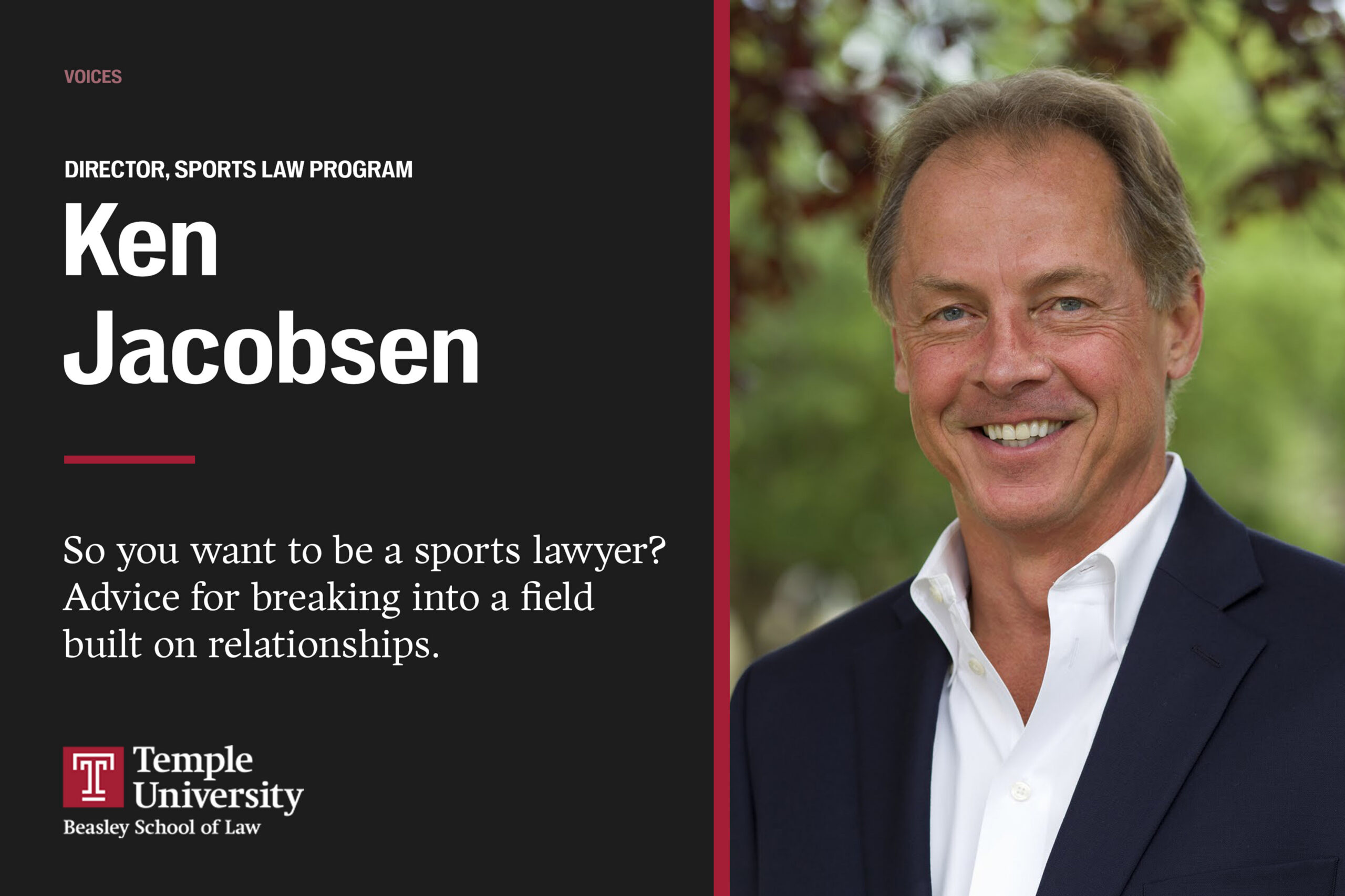
I receive a lot of inquiries from law students, recent graduates, and even senior lawyers asking for advice about breaking into sports law. Many of these messages come from students and lawyers from other states who follow me on social media or who have attended panels or seminars where I served as a featured speaker. It is truly humbling.
I am always open to talking with anyone in the legal profession who shares my passion for sports law and the commitment to the analytical, negotiation, and drafting skills that this practice area demands. But the harsh reality is that getting a job in sports law is often not based on merit alone. The selection process is heavily weighted towards relationships and prior experience.
Everyone wants in on sports; practicing in this area brings with it a certain “cool” factor. People will work harder to be a sports lawyer, many will take a pay cut just get in the door. But getting those jobs are often based just as much on good timing and personal contacts as striking gold on internet job searches or cold calling teams, agencies, venue operators or others with “sports” on their resume.
Not only is opening the door a challenge, but getting through it can be just as demanding. Many of the opportunities available in sports law require prior experience, especially in transactional work. Having some background in labor and employment law can also be a plus. In most cases, sports businesses, including professional clubs, will outsource their litigation work to outside counsel. I have even seen job postings that expressly say that “litigators need not apply.”.
All of that aside, this does not mean that the door is closed. Patience and persistence are key. You break through the barriers by taking unpaid internships, joining organizations like the Sports Lawyers Association, and attending conferences and seminars. Do the things that will make you connections and set you apart from the others working just as hard; volunteer your time at college compliance departments, athletic conferences, professional players’ unions or other organizations. Putting yourself in those environments is how relationships in sports get built.
Sports move slower than most industries. Relationships are built on trust, confidence, and integrity, not on the speed you make them. You will not be an overnight success; it’s a grind, plain and simple. But keep pushing, because there’s light at the end of the tunnel. Sports are constantly shifting—deals are happening, money is flowing, regulations are changing every day. The money in sports has always been top-heavy, benefitting celebrity coaches and so-called “power” conference universities and “Big 4” professional teams in their lucrative media rights deals. But now professional athletes are getting paid more than ever, and money is also flowing freely to college athletes through revenue-sharing and name, image and likeness (“NIL”) arrangements. Private equity has also taken hold in professional sports and college athletic programs.
These changes and developments have led to a massive growth in sports law and have led to a need for more talented sports lawyers. In a recent article, I wrote about how several of the world’s most prestigious law firms—including Paul Hastings, Latham & Watkins, Kirkland & Ellis, Davis Polk, Cleary Gottlieb, and Simpson Thacher—have all made significant moves in sports law over the past twelve months. Whether through strategic lateral hires or launching dedicated sports practice groups, major firms are positioning themselves to advise clients operating in one of the fastest-growing sectors of the global economy. Where there is money, there is a need for lawyers.
You just need to be in the right place at the right time. Focus on putting in the work and controlling what you can control. If you show up, develop those contacts and relationships, do a good job in internships or volunteer positions, and remain laser focused on your mission, you’ll find yourself in the places you need to be.
