
Right now, I am preparing for my last presentation of this final semester, and my mind keeps going back to the Temple Law Rome summer program—the summer I grew up. Then I was stumbling over my notes, but now, finally completing my legal education at Temple Law, I see that growth supported by the encouragement and attention of my classmates and professors. One day, I will become a lawyer, and if I am lucky enough, I will work as a prosecutor. I am not afraid. I am not anxious. No matter which path I take, I am certain that this learning experience has given me enough confidence.

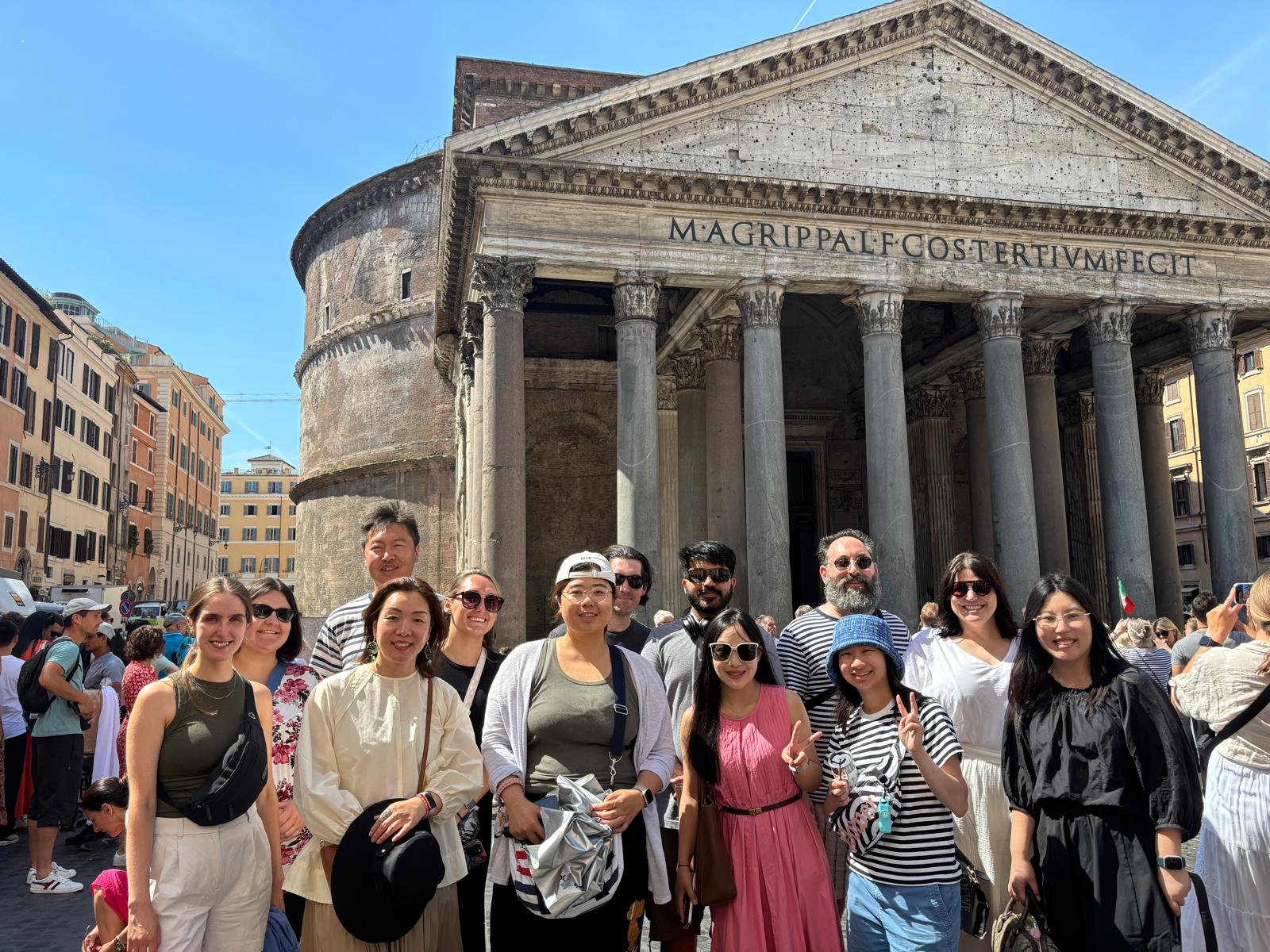
Xin Lyu standing in front of the Arch of Constantine.
Ever since I was a little girl, I knew I would study law. I felt a deep connection to the law from the age of twelve. I participated in a mock trial competition, and from that moment, a seed had been planted in my heart. That is also an important reason I decided to study at Temple Law.
My undergraduate school, North China University of Science and Technology, has a longstanding partnership with Temple University. Through Temple’s collaboration with several Chinese law schools, including my university, and the support of the staff in Temple’s Beijing office, I learned about Temple Law’s Study Abroad Program in Rome and decided to apply during my sophomore year.
For me, it was an exciting but nerve‑wracking challenge. This would be my first time learning in an all‑English environment! It would be a kind of trial by fire. I told this to my American professors, Andy Monroe and Kristen Murray, and promised to do my best to keep up. I still remember my face turning red and my heart beating faster as I spoke. Then I met their encouraging eyes, and with that, the month‑long Rome program began.
I had the support of my professors, local guest lecturers, Karen Yang, Temple’s Beijing program director who traveled with the group, and Dean Smagula, who was also supporting us from the main campus in Philadelphia. I set a goal for myself: to raise my hand and participate in every single class, every day—yes, every single day! Professor Monroe would encourage me by saying, “You did a great job!” Outside the classroom, I made many close friends with whom I am still in touch with today. I consider the encouragement and friendships I formed a wonderful and meaningful gift beyond academics.
During those four weeks in Rome, challenges and rewards went hand in hand. I feel incredibly lucky and grateful! The extracurricular activities are still vivid in my memory: the “ice‑breaking” dinner in the village of Tragliata, the visit to the Italian Supreme Court, the tours of WWII sites and the Pantheon, and the fun wine‑tasting lesson. And inside the classroom, revisiting the separation of powers, looking at Chinese law from a different perspective, studying Roman law while in Rome—these were unique and deeply enriching experiences.
In September 2024, three months after the Rome program ended, I sent a message to Dean Smagula and Karen Yang: “This ‘trial by fire’ in Rome has actually strengthened my determination to study in Temple’s LL.M. program. I look forward to seeing you again.” Temple Law’s Rome program felt like a dream in the middle of my quiet undergraduate life, beautiful and brief, but deeply memorable. After returning to China, I went on to finish my undergraduate law degree. I knew I still had a long way to go before I could set foot on Temple’s Main Campus in Philadelphia. In my senior year, while passing China’s bar exam, I also received a cooperative scholarship from Temple University and the China Scholarship Council. Then came the “ding” of an email: “Congratulations! Your dream has come true.” I had been admitted to Temple Law’s LL.M. program.
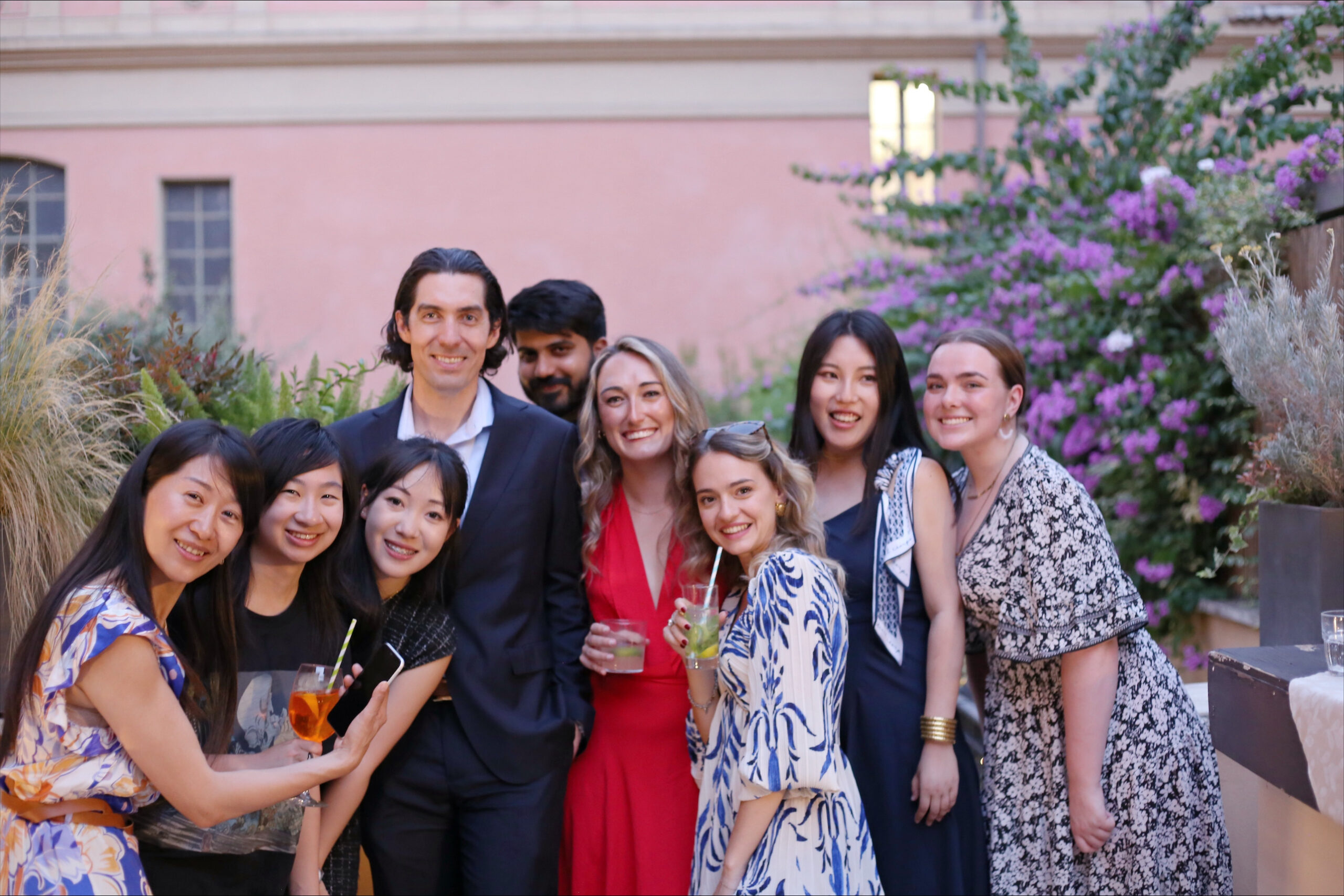
Xin Lyu in a group photo with friends in Rome.
After arriving at Temple’s main campus in Philadelphia, even though I had never been there, everything felt familiar—from the Socratic method of teaching, to asking about administrative or technical issues, to familiar faces from the Rome program and warm greetings. It helped me adapt to law school life quickly. When I was selecting courses for my first semester, I noticed that one of the professors teaching Torts was none other than my Rome professor Andy Monroe, whom I already knew and deeply appreciated.
It’s hard to describe that feeling. It was as if you had carefully pushed open a door in Rome one summer, and now, in Philadelphia, the person behind that door recognized you and continued to walk with you. In Professor Monroe’s class, I no longer blushed or felt as nervous as the first time, but I raised my hand confidently, and I still received a “You did a good job” after class. When the course ended, Professor Monroe specifically mentioned, “It was such a welcome surprise to be reconnected with a student I knew from Rome two years ago, here in this same yet different classroom.”
If I had to say what the Rome program gave me, it was not just knowledge of Roman law or comparative law. It was a kind of certainty: I can survive, and find my footing, in an all‑English legal environment. Looking back now, the path from Rome to the LL.M. was never a “sudden decision” for me. It was a series of small confirmations—confirming that I love the law, confirming that I can do it, confirming that people are willing to help me do it.
In Rome, I studied Roman law; back in China, I studied our civil law system. Gradually, I grew accustomed to the idea that “law is written in statutes.” But after arriving at Temple for my LLM, I discovered that American law largely “grows out of cases.” Reading each case, analyzing the judge’s reasoning—it feels like putting together an ever‑expanding puzzle. This difference made me realize that law is not just a set of rules. It is also a way of thinking and a way of expressing.
If I were to give one piece of advice to friends considering this path, I would say: do not be afraid of that beginning where your face turns red, and your heart beats faster, because very soon, someone will say to you, “You did a great job.” And you will remember those words for a long time. Temple’s professors and lovely friends will never let you feel lost or alone. You will push open that door, and I believe that on the other side, there will be encouragement and growth.
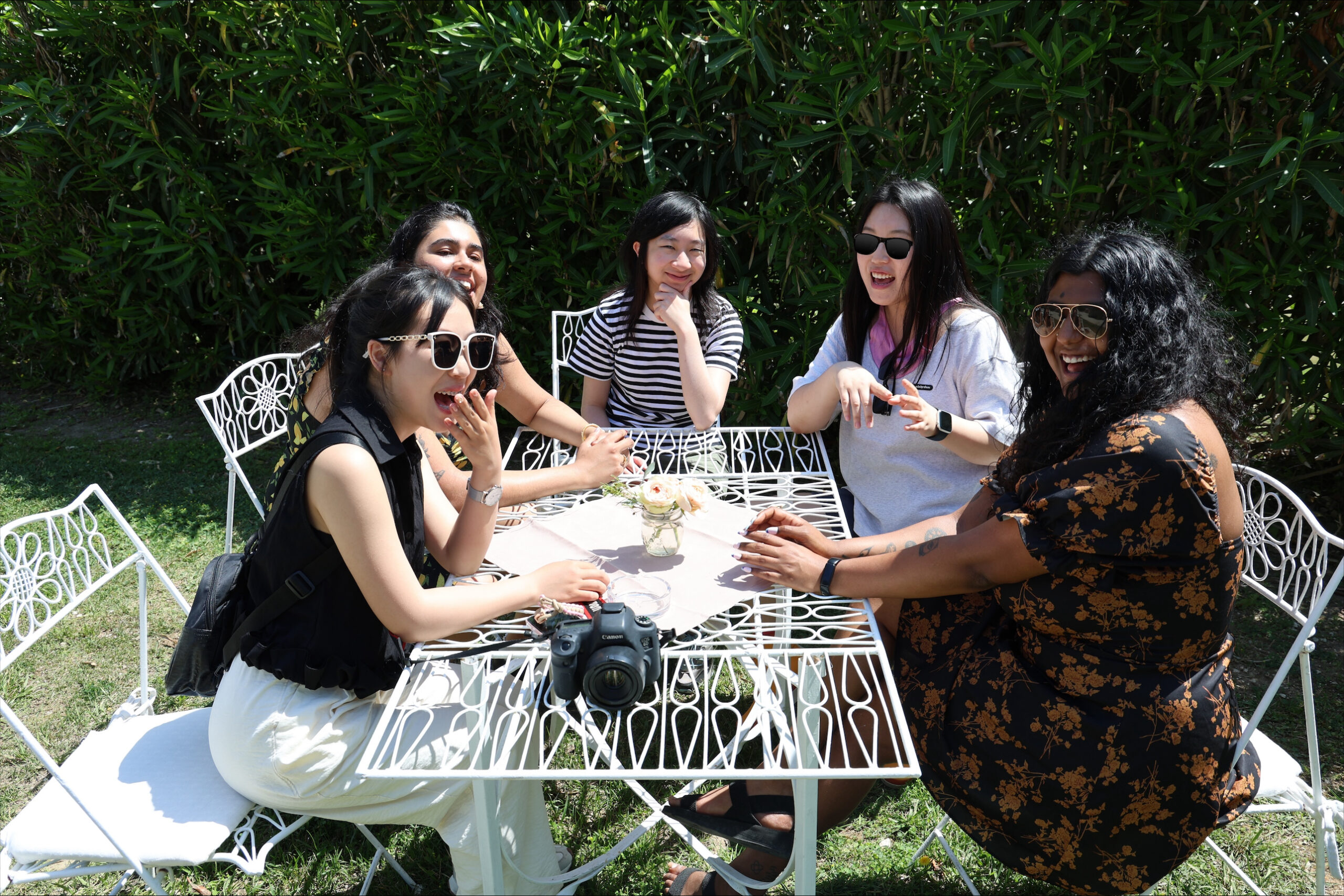
Xin Lyu and a group of friends in Rome.
