All posts filed under: Student Commentary

The Family Law Clinic: A Student Advocate’s Perspective

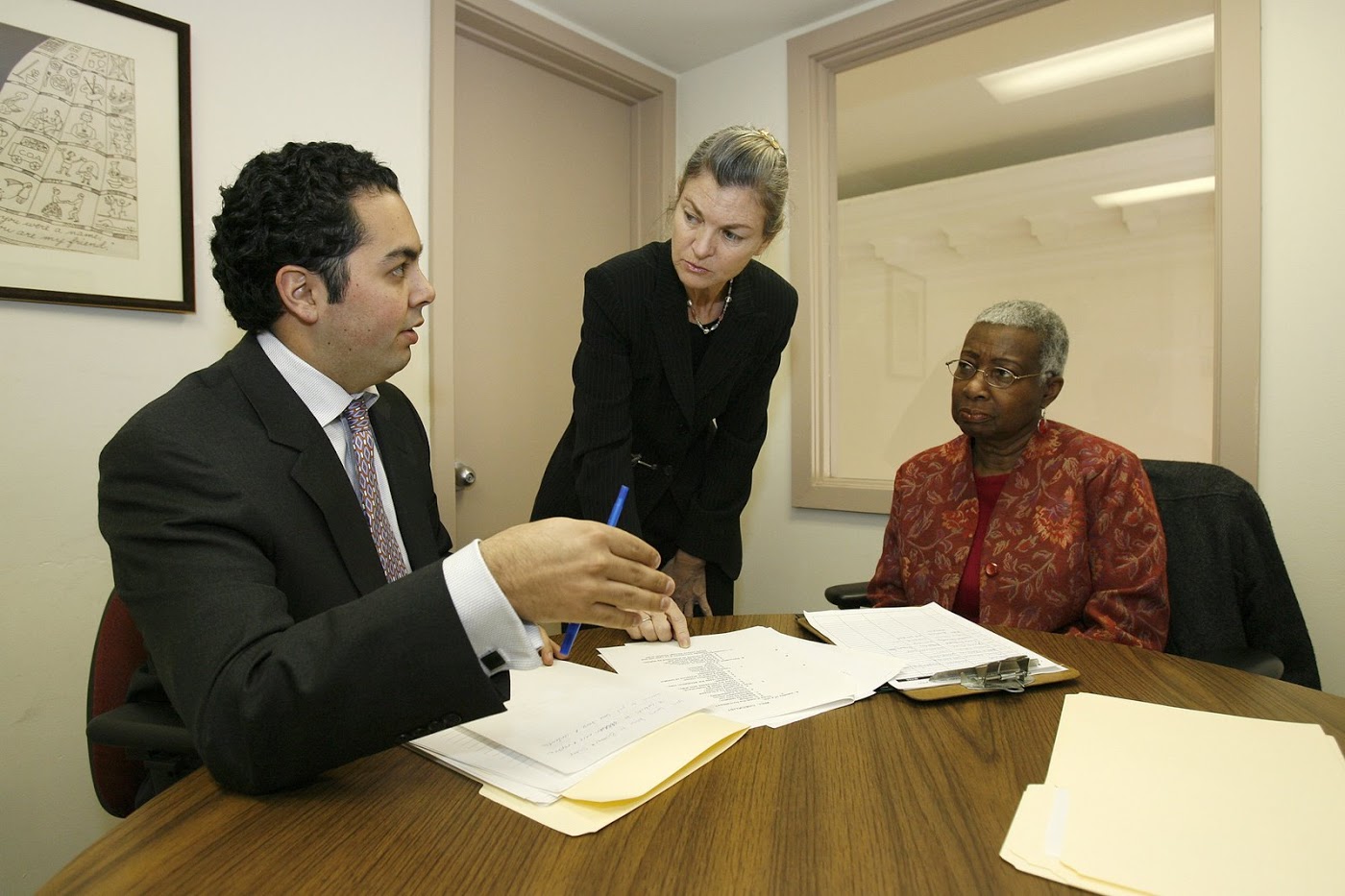
Working within the Temple University Legal Aid Office, Family Law Clinic has been, without a doubt, my most rewarding experience in law school. Temple’s Family Law Clinic gives law students the opportunity to work as a legal advocate for clients under the supervision of an attorney and law professor. This gives a student, who may have no prior legal work experience, an opportunity to work within a law office, as a certified legal intern. A certified legal intern works along side the supervising attorney interviewing and counseling clients, drafting and filing documents, negotiating with opposing parties or opposing counsel, and going to court and arguing on behalf of the client. Clinical work is supplemented with an academic course, in which students are taught substantive family law, complete case rounds, and discuss any issues or interests that may come up as a result of working within the clinic. What sets the Family Law Clinic apart from a typical law school course, an internship, or an externship, is the combination of academic study and practical application. For …

The Elderly Law Project: A Student Advocate’s Perspective

Part of the reason I went to law school was to learn to help people I know navigate the very confusing world of growing old. The Elderly Law Clinical gave me the chance to apply the knowledge I had acquired in my Law & Aging class to real-world situations faced by Philadelphia Seniors. To get the most out of the Clinical, taking Professor Kroll’s Law & Aging class is a critical prerequisite. The class gave me a basic understanding of many issues that came up in our discussions of client issues – social security and healthcare planning, long term care issues, etc. Additionally through our discussions in that class, I learned to think about issues specific to senior clients which, normally, I wouldn’t have considered. I would never have  thought about tuning the aesthetics of an office for aging eyes and ears, or for accessibility. Professor Kroll used real life examples to stress the importance of realizing who our client truly is, and the difficulty, yet critical importance, of assessing capacity. These discussions in the …

Walking While Black – A Reflection

Before the beginning of my last semester at Temple Law, I braved a very cold, windy, and snowy day to take part in the screening of the documentary “Walking While Black: L.O.V.E. is the Answer.” The film attempted to take a balanced approach in discussing the deep-rooted problems in America when it comes to the distrust that many Black Americans have with law enforcement, and the dysfunctional relationship between the two. The film attempts to humanize the Black victims of injustices propagated by law enforcement by focusing on some of the incidents that have gotten a lot attention, and many that have not. The film also attempts to humanize members of law enforcement by using primary sources to give the viewer insight into what it’s like to be a member of law enforcement in this current criminal justice reform environment. Ultimately, the film ends with a call to action, for victims of injustices, their families and communities, to engage in a reconciliatory approach with members of law enforcement for the purpose of creating a relationship …

Running for State Representative – Q&A with Maggie Borski and Nick Elia

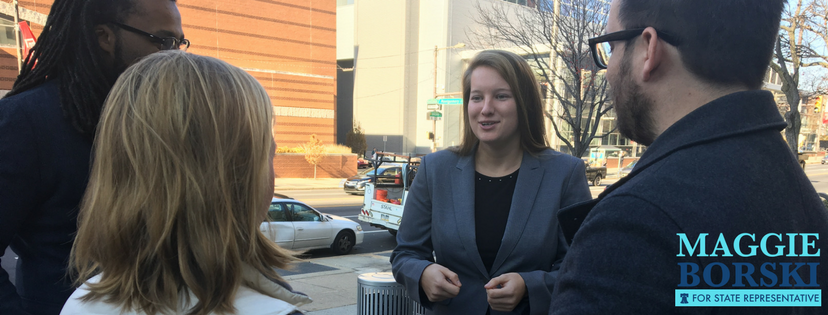
At Temple Law, students don’t wait for graduation to start chasing their dreams and building their careers. Currently a third-year law student, Maggie Borski is running to represent the 177th District in the Pennsylvania House of Representatives. She and her campaign manager, fellow 3L Nick Elia, sat down with Temple Law for a Q&A last month during finals to share their experiences so far. Temple Law: What made you decide that you wanted to run for district representative? Maggie Borski: I actually did an internship with State Representative Donna Bullock last spring and it was wonderful. I got to know her pretty well, and her staff. I had mentioned to her that, maybe down the line, pursuing public service, public office, would be something I’d be interested in. When the semester began, literally the second week of classes, I get a Facebook message from Donna and it was an article saying my representative, John Taylor, was not seeking reelection. It was kind of like a light bulb went off, you know, if there’s ever a …

A Reflection on Justice

For her undergraduate thesis in criminal justice, Nicole Gonzalez Van Cleve organized court watchers in Chicago’s Cook County courthouse. She hoped to create an ethnography of America’s largest courthouse across thousands of hours of interviews and first-person observations. More than a decade later – and now as Professor Gonzalez Van Cleve – she published these observations as Crook County: Racism and Injustice in America’s Largest Criminal Court. Professor Gonzalez Van Cleve spoke about her recent publication on November 9th here at the Beasley School of Law, alongside Professor Hosea Harvey of Temple University. Employing an interrogative style, Professor Gonzalez Van Cleve began by presenting some of the results of her research. As an ethnographer, Gonzalez Van Cleve pointed out that language in her field functions both as indicator and as an active, purposive agent. She was particularly interested in the way that language – specifically racially coded language – worked in court communities and the justice system itself. In this way Professor Gonzalez Van Cleve’s Crook County expands on the work of Michelle Alexander’s The …

Welcome Back, Law Owls!

On November 13th and 14th, Temple Law celebrated ‘Friends and Family Days.’ Our 1L students were invited to bring their loved ones to campus, and for some, this meant returning to their alma mater. Two of our part-time evening students and their fathers, also former evening students, shared their thoughts on returning to Temple Law. Gerald Clarke LAW ’00 As an alumni of the evening program, it was a thrill to come back for Friends and Family night as a parent of one of the evening division students. I was struck by the friendliness of my daughter’s classroom. It was exciting to come in as a spectator and observe the class from a perspective that felt different than the tension you feel as a student. It is obvious that the building blocks coaxed by this dedicated professor will positively benefit these future lawyers. Brittany Clarke LAW ’21 Being a legacy is one of the main reasons I decided to attend Temple Law. I was eight years old when my dad graduated from Temple, and I …

Who Runs the World?

Growing up, I was lucky enough to be surrounded by amazing women – my mom, grandmothers, aunts, family-friends – they made being strong look easy. The moment I began to feel the responsibility of being a woman was when I was 9-years-old and my little sister was born. I saw her for the first time and from that day on, I wanted to be the best version of myself for her. Girls need role models to look up to. If they don’t see women in the legal profession, they might not think they are capable of being lawyers – which could not be further from the truth. Representation is key for change to occur. Women throughout history have worked tirelessly to gain many of the rights we enjoy today. I feel that it is our generation’s responsibility to continue their work and strive for true equality. While interning at Susan G. Komen Philadelphia, I saw first-hand how crucial the fight for women’s rights is and what can be achieved when women work together toward a …

Being a Prepared and Flexible Advocate

My law student partner and I recently represented a client at an arbitration hearing through the Sheller Center for Social Justice’s Advanced Social Justice Lawyering Clinic. Our client was a low-wage worker who had not been paid minimum wage and overtime by her former employer, for whom she worked for seven years. Her case had been ongoing for several years and she wanted a chance for her story to be heard — regardless of the hearing’s outcome. I was tasked with cross-examining the opposing party with an interpreter. To prepare for my cross-examination, I looked through depositions and documents, then crafted short and leading questions that I hoped would result in admissions that supported our case theory. The thing I did not anticipate was under what circumstances I would be conducting my cross-examination. Once it was time for my cross-examination, the arbitration had been in progress for approximately four hours and the panel was noticeably impatient. I wound up cutting a significant portion of my cross-examination on the spot because the witness was unable to read the documents that I’d …