Archives

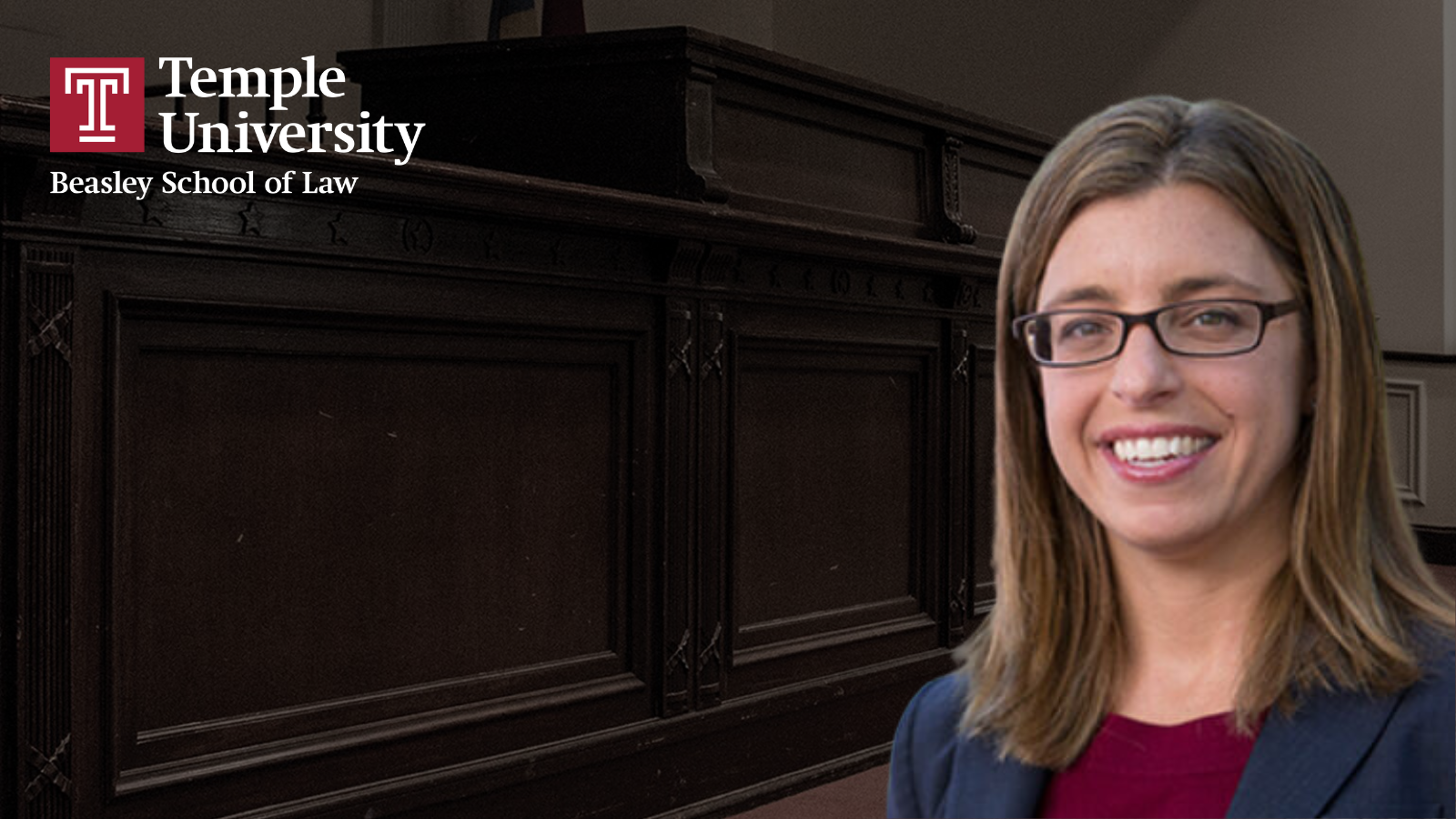
Temple University Beasley School of Law's Professor Margaret deGuzman sitting on the judge of the Residual Mechanism for International Criminal Tribunals.

Are Juries Worth the Effort? A View from the International Bench

At this year’s Edward Ross Lecture in Litigation, the Honorable Rebecca Pallmeyer, Chief Judge of the United States District Court for the Northern District of Illinois, addressed the important and controversial topic: are jury trials worth the effort? Judge Pallmeyer’s answer was an unequivocal “yes.” She argued that juries are not merely useful tools for adjudicating cases, they are integral to the legitimacy of the American legal system. According to the Chief Judge, jury trials are one of the reasons that Americans respect the law. In her view, juries are often perceived as more impartial than judges, bringing diversity of experiences and perspectives to the resolution of cases. She emphasized that participation in the jury system promotes confidence in the system’s fairness.  Judge Pallmeyer’s views comport with conventional wisdom about the importance of juries. As every American knows, jury service is an essential duty of citizenship. According to a Pew Research Center Survey, two-thirds of U.S. adults consider jury service integral to good citizenship. District Court Judge Zach Zouhary begins trials by telling jurors that …
The Trump Indictment: What’s Happened and What’s Next

A New York grand jury has indicted former President Donald Trump on fraud charges, marking the first time in US history that a former or current president has faced criminal charges. Professor Lauren Ouziel, a former federal prosecutor who teaches and writes about criminal law and criminal procedure at Temple Law, explains what’s happened so far and what’s likely to happen next. Temple Law School: How do indictments work? Lauren Ouziel: A grand jury, which is a group of randomly selected people (in New York, the group is composed of 23 people), meets to hear the testimony of witnesses and review any documentary evidence. At the close of the presentation of evidence, the prosecutors will usually then present the grand jury with a proposed indictment containing the charges against the defendant. The grand jury then deliberates and considers whether there is probable cause to believe the defendant committed the crimes charged in the indictment. The grand jury then votes, and if at least 12 of the grand jurors vote in favor, the indictment is issued. …

More Than a Seat at the Table

More Than a Seat at the Table – Meaningful Multistakeholder Engagement yet to be Seen at UN Cybercrime Treaty Negotiations The Colonial Pipeline is one of the largest oil pipelines in the United States, spanning over 5,500 miles and supplying nearly half the fuel for the East Coast. On May 6, 2021, Eastern European hacker group DarkSide initiated a ransomware attack on the pipeline’s digital system, demanding 75 Bitcoin while holding the company’s data hostage. In response to the attack, Colonial temporarily halted all pipeline operations, causing jet fuel shortages for airlines, and leading to consumer panic buying and spiking gas prices. The Colonial Pipeline attack was not an isolated incident, ransomware attacks are rising in frequency and scope and have targeted critical infrastructure like healthcare and education systems. Information and communication technologies (ICTs) stretch across political borders, connecting societies like never before, and can increase opportunities for social and economic benefits. The COVID-19 pandemic accelerated dependence on digital infrastructure in myriad ways, facilitating drastic changes in work, education, and industry patterns. While digital connectivity …

Faculty in the Media

In the wake of a leaked Supreme Court draft opinion indicating that the historic Roe v. Wade ruling could be overturned, Temple Law faculty and staff lend their expertise to national media conversations surrounding this unprecedented development. Interim Dean Rachel Rebouché | Rolling Stone | If the leaked opinion overturning Roe becomes law, it “will have bent the moral arc of the universe backward,” writes interim Dean Rachel Rebouché and co-authors David S. Cohen and Greer Donley in Rolling Stone. Click to read. Interim Dean Rachel Rebouché | Bloomberg Law | Justice Alito’s draft opinion in Dobbs would subject laws regulating abortion to rational basis review. Interim Dean Rachel Rebouché explains what that means and how it might apply. Click to read. Interim Dean Rachel Rebouché | Washington Examiner | Returning abortion regulation to the states will invite laws that disrupt longstanding interstate cooperation, says interim Dean Rachel Rebouché. Click to read. Professor Craig Green | The Philadelphia Inquirer | Justice Alito’s draft opinion in Dobbs may have roots in his very first opinion, a …

Photo of people in a board room with biometric face scans

Temple Law Confronts Policy Gaps for Emerging Technologies

Newly founded institute advocates for federal regulation of AI-enabled biometrics The technology boom of the last several decades showcases incredible feats of human ingenuity. Biometric technology in particular has quickly and quietly embedded itself into our lives as we monitor our kids, calories, and homes through our phones. However, as we idly scroll, we are increasingly being watched. For example, the Philadelphia Police Department has access to more than 1,800 surveillance cameras through one of a growing number of fusion centers in the United States, operated by state and local law enforcement in partnership with the U.S. Department of Homeland Security. Pennsylvania driver’s license photos and records feed into the state’s law enforcement database, JNET, which operates a facial recognition system called JFRS. As humankind continues to invent greater, more powerful, and potentially more intrusive tech, Temple University’s newly founded Institute for Law, Innovation & Technology (iLIT) seeks to help regulate them by focusing on practical engagement and the human dimension to making and using technology. Its mission is to deliver equity, bridge academic and …

Can we make ‘Sense’ of the Kyle Rittenhouse Acquittal?

It is no surprise that many feel dismay over the acquittal of Kyle Rittenhouse and see the verdict as resulting from the American tolerance of gun culture; a nearly all-white jury favoring a white defendant; a baby-faced [in the jurors’ eyes] teen who did not match a stereotype of a ‘gun-toting’ marauder; and a reaction against the purported violence of racial justice protests. But those views impose social concerns on what is ultimately a trial, a process where a jury must confront two competing narratives.  Sorting out the possible social and cognitive contributing factors cannot be done with precision and in fact such an exercise may be fruitless.  But self-defense law Wisconsin style and the conduct of Rittenhouse’s trial offer easy explanations of how a ‘not guilty’ verdict was reached either because jurors simply followed the law or made the defense story fit with their implicit (or express) biases. What were the stories?  The prosecution’s was simple, laid out in the opening statement: [T]he defendant Kyle Rittenhouse, who was 17-years-old at the time, had armed …

“The Cart Before the Horse” – A Kenyan Court Just Quashed a USD 95M Biometric Digital ID Project

The case is a watershed moment in the regulation of data-driven public sector initiatives The Context: A Global Biometric Identification Industry Digital technologies dominate decisions about the future of public infrastructures like civil registration and electoral systems, social assistance, and banking. The prospect of digital transformation in these sectors stokes optimism in emerging economies and receives ample support from influential international development and foreign aid institutions like the Inter-American Development Bank, the European Union, and the World Bank. In the case of digital identification systems (digital ID), the 2030 Sustainable Development Goals, specifically Target 16.9 which obliges governments to “provide legal identity for all,” unleashed a tidal wave of global investment (from wealthy economies). Those investments are tied to the untested assumption that there is a rough equivalence between a digital ID, and legal identity, which is anchored in the human right to recognition as a person before the law. The actual integration of human rights and development languishes far behind the implementation of these technologies, but further investment in understanding and mitigating the human …

Photo of Professor Melissa Jacob

Q&A with Professor Melissa Jacoby

In September of 2019, Purdue Pharma LP filed for Chapter 11 protection after facing a wave of lawsuits over its opioid painkiller drug, OxyContin. The Sackler family, who own the pharmaceutical company, have attempted to use a controversial tactic to get bankruptcy-like protections to without filing for bankruptcy in order to protect their personal assets and holdings. On Wednesday, June 15th, according to Bloomberg, “U.S. Bankruptcy Judge Robert Drain approved an investigation into whether the drugmaker’s owners, members of the billionaire Sackler family, have had undue influence on an independent committee of Purdue board members,” a win for the advocacy group of parents whose children died as a result of opioid abuse. Professor Jonathan Lipson, Harold E. Kohn Chair and Professor of Law at Temple Law School, was of counsel to the movant. His colleague, Professor Melissa Jacoby, Graham Kenan Professor of Law at the University of North Carolina at Chapel Hill, put the ruling into context.  Temple Law School: In in the June 15th ruling, Judge Drain approved an investigation, which will give an …

Graphic of a globe with interconnected bubbles with cartoons of various people and practitioners to exemplify World Health Day

A Decade of Public Health Legal Education

Law is the primary social tool used to influence behaviors and environments — for “generalizing or scaling up practices judged collectively beneficial, forestalling negative behavior, and setting powers, duties, and limitations on public and private entities.” As researchers, policymakers, advocates and others seek to better understand how and why legal interventions make a difference to the public’s health, public health legal education stands as a crucial component in the capacity building necessary for rigorous and rapid evaluation of these legal interventions that “treat” millions of people. That evaluation — called public health law research, or legal epidemiology research — supports evidence-based policy- and decision-making that can advance health, improve well-being, and increase equity not only in the United States, but around the world. For nearly 12 years, the Center for Public Health Law Research at the Beasley School of Law has been dedicated to that capacity building through our work developing research methods for legal epidemiology, like policy surveillance (which is the systematic, scientific tracking of laws of public health significance); funding research projects with …

Transgender Pride Flag of blue, pink, and white stripes

How Cisgender Advocates Can Honor Transgender Day of Visibility (Everyday)

Last year, at the start of (our awareness of) the coronacrisis, I read the story of anthropologist Margaret Mead being asked by a student what she considered to be the first sign of civilization in a culture. The student expected Mead to talk about hunting tools, the wheel, grinding stones, or clay pots. Instead, the anthropologist answered that the first evidence of civilization was a 15,000-year-old fractured femur found in an archaeological site. The bone, which links hip to knee, had been broken and healed. Mead explained that in the animal kingdom, if you break your leg, you die. You cannot run from danger, get to the river for a drink, or hunt for food. You become easy prey for prowling beasts. A broken femur that has healed is evidence that someone helped a fellow human and took time to stay with the one who fell, rather than abandoning them to save their own life. The message was that we feel more human when we help others, and that generosity and altruism are (or should be) …