| Socially Marginalized Populations Exist in a “Risk Environment” Created in Important Part by Laws and Law Enforcement Practices Health actors such as IDUs exist in complex “risk environments” in which individual risk behaviors are shaped by ecological factors, including a limited availability of resources (such as clean syringes, hygienic places to inject, or drug treatment), and a legal and policy environment that focuses on social control and punishment of drug users . An ecological approach to health and the structural interventions targeted to these environmental factors are thus important elements of an effective response to HIV and other diseases afflicting legally marginalized populations. In particular, RPAR focuses on evidence demonstrating that criminal laws and associated law enforcement practices are significant ecological factors structuring IDUs’ risk and behavior. These laws and legal practices are among the most readily identifiable and, in some settings, malleable ecological risk factors influencing IDUs, an important consideration in places where the epidemic is growing rapidly and resources for interventions are limited. 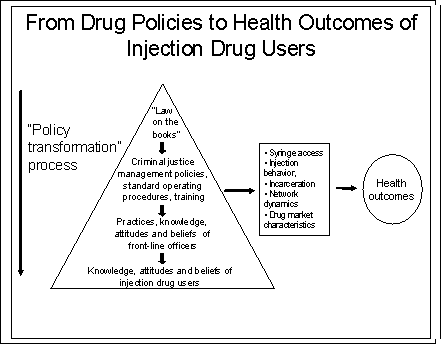 | Last Updated: February 2006 |